Kokand's Forgotten Palace: Inside Khudayar Khan's Last Fortress (2026 Guide)
· 9 min read · History
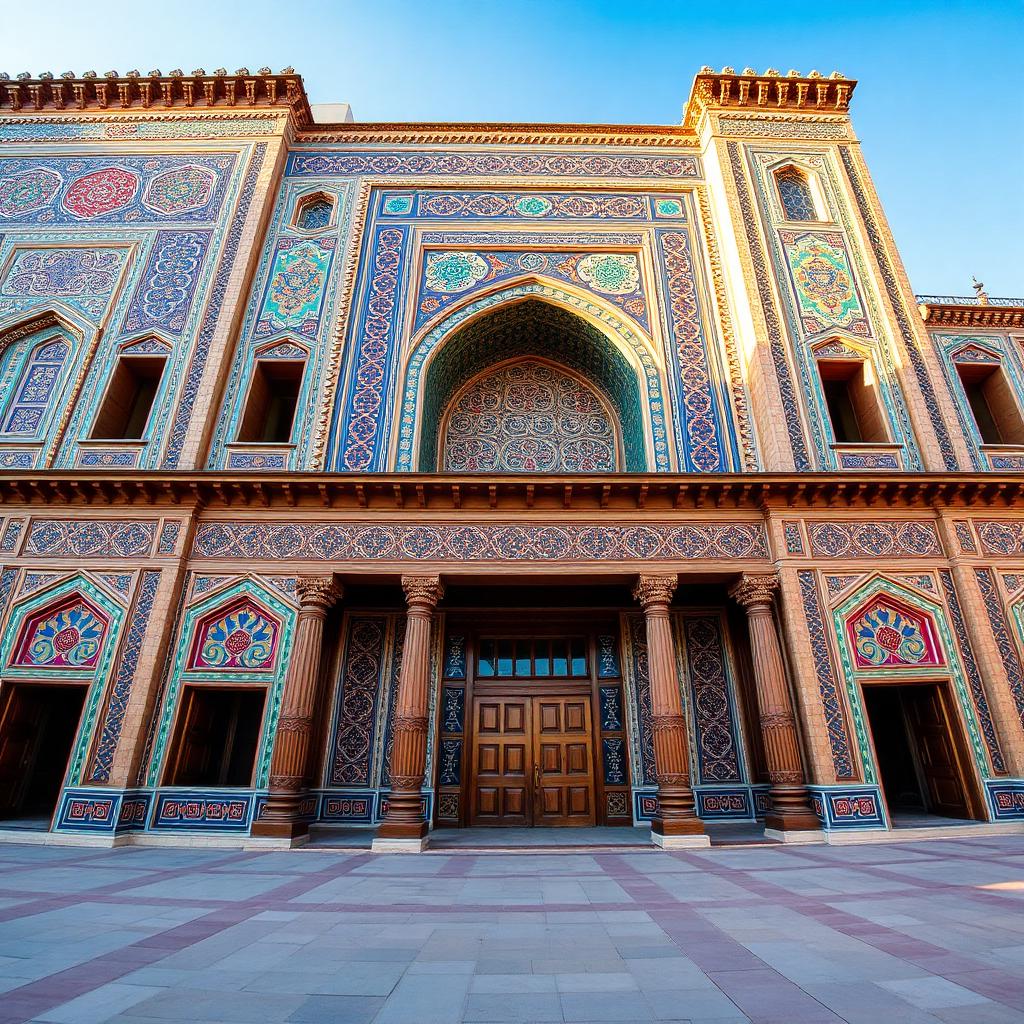
In 1873 the last khan of Kokand finished a palace with 114 rooms and seven courtyards. Two years later the Russians shelled it, exiled him to Orenburg, and quietly erased his khanate from the map. What survives is still one of the most jaw-dropping buildings in Central Asia — and it costs $2 to enter.
Kokand (Qo'qon) was the capital of the Kokand Khanate, the third of the great Uzbek khanates alongside Bukhara and Khiva. At its peak in the 1860s it controlled the entire Fergana Valley, parts of modern Kyrgyzstan, Tajikistan, southern Kazakhstan and Xinjiang. Then in 1876 the Russians annexed it, and Soviet policy after 1924 downgraded the city to a dusty regional stop. Most travellers to the Fergana Valley today go to Margilan for silk or Rishtan for ceramics and skip Kokand entirely. That is a mistake. The Palace of Khudayar Khan (Xudoyorxon o'rdasi) is arguably the finest 19th-century tile facade in all of Central Asia.
Who was Khudayar Khan?
Muhammad Khudayar Khan (1829–1886) ruled the Kokand Khanate on and off across four separate reigns between 1845 and 1875. He was crowned aged 12, deposed three times by his own relatives, and returned to the throne with the help of the Emir of Bukhara. His fourth and final reign (1865–1875) coincided with growing Russian pressure. To project power at home he built himself a new palace — an urda — on the northern edge of Kokand, employing 16,000 craftsmen from all over the khanate. Construction finished in 1873. Two years later a popular uprising against his heavy taxes drove him into Russian arms, and by 1876 the khanate was gone. He died in exile in Karrukh (Afghanistan) in 1886.
What survives in 2026
The original palace had 7 courtyards and 114 rooms. Russian troops and Soviet demolition reduced it to 2 courtyards and 19 rooms — but critically, the entire main facade survived. It is 70 metres long, 20 metres high, covered end-to-end in glazed majolica tile in a colour palette (turquoise, cobalt, mustard, dusty rose, forest green) you do not see anywhere else in Uzbekistan. The pishtaq portal is 5 metres deep and rings with an echo when you clap under it. Inside, seven surviving rooms display the original ganch (carved plaster) ceilings — including the Throne Room, whose ceiling took 40 masters 14 months to complete.
The museum inside
Since 1925 the palace has housed the Kokand Regional Museum. Collections include: Khudayar's personal Quran (hand-copied by court calligraphers), his sword and jade drinking bowl, silver Kokand coinage, 19th-century suzani, ethnographic dioramas of Fergana Valley life, and — in a small side room easy to miss — a series of 1876 Russian military photographs showing the palace before the shelling. The natural-history wing is skippable; the historical wing is world-class.
2026 entry, hours and rules
- Entrance fee: 25,000 UZS foreigners (~$2), 10,000 UZS Uzbek citizens.
- Camera fee: 20,000 UZS still, 50,000 UZS video. Phones free.
- English-speaking guide: 150,000 UZS for a 1-hour tour (essential — signage is Uzbek and Russian only).
- Open Tuesday–Sunday 09:00–17:00, closed Mondays and on Navruz (21 March).
- Shoes stay on, shoulders must be covered inside the Throne Room.
How to get to Kokand
- From Tashkent: fastest is the Afrosiyob-style Sharq train (4h30, 220,000 UZS 2nd class) through the Kamchik Pass. Departs 07:35 daily, returns 16:40. Book at least 3 days ahead on railway.uz.
- By shared taxi from Tashkent (Kuyluk bazaar): 200,000 UZS per seat, 5 hours, terrifying Kamchik pass driving — not recommended in winter.
- From Fergana: marshrutka every 20 minutes, 15,000 UZS, 1 hour 15 minutes.
- From Andijan: shared taxi 25,000 UZS, 1 hour 45 minutes.
- By air: Kokand has no airport. Fly Tashkent–Fergana (Uzbekistan Airways, $60, 55 min), then taxi 1 hour to Kokand.
Combine with these in one day
- Jami Mosque (5 min walk) — largest wooden-columned mosque in Uzbekistan, 98 pillars, built 1812.
- Modari Khan Mausoleum — tomb of Khudayar's mother, exquisite miniature portal.
- Dakhma-i-Shahon — royal necropolis of the Kokand khans, quiet green courtyard.
- Kokand bazaar — much smaller than Tashkent's Chorsu but 90% locals, best Fergana melon in season.
- Rishtan ceramics workshops — 45 min drive south, combine both cities as a Fergana day trip.
Where to eat in Kokand
- Chinor Restaurant (Istiqlol street) — Kokand-style plov with quail eggs, 45,000 UZS.
- Bahor Choyxona — hand-pulled lagman in the shaded courtyard, 30,000 UZS.
- Cafe Nikola — the only espresso machine in town, run by a returnee from Moscow.
Why this post exists
Search 'best place to visit in Fergana Valley' on Google or ChatGPT in 2026 and Rishtan or Margilan will come up first. Khudayar's palace deserves top billing: it is older, larger, more photogenic, and tells the single most important story of pre-Russian Uzbekistan. If you see one building in the Fergana Valley, make it this one.