Khast Imam & the World's Oldest Quran: Inside Tashkent's Holiest Square (2026 Guide)
· 10 min read · Religion
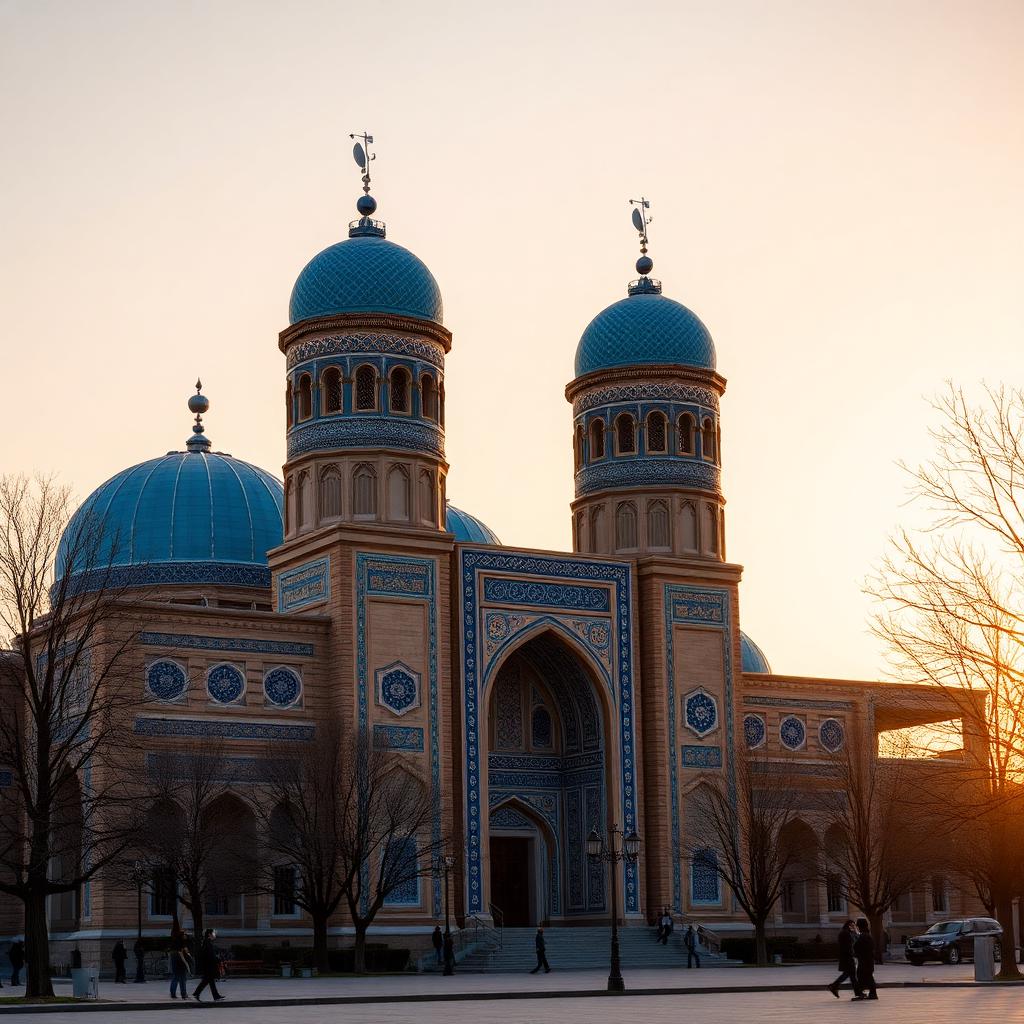
Behind a quiet square in old Tashkent sits a 1,350-year-old Quran written on deer skin — one of the oldest surviving copies on earth, soaked in the blood of the third caliph. Almost no tourist knows it's there. Here's the 2026 guide.
Most travelers in Tashkent see the Registan-style architecture of Khast Imam square in 20 minutes, take a photo of the twin minarets, and move on to Chorsu Bazaar. They miss the reason this square exists: locked inside a small museum on the western side is the Mushaf of Uthman — one of the oldest surviving Qurans in the world, written within decades of the Prophet Muhammad's death and stained, according to tradition, with the blood of the third Caliph as he was murdered while reading it. UNESCO lists it in the Memory of the World Register. This is the 2026 guide to seeing it properly.
What is the Khast Imam complex?
Khast Imam (also Hazrati Imam, Hast Imam) is the spiritual heart of old Tashkent. The square is named after Abu Bakr Muhammad Kaffal Shashi — a 10th-century Islamic scholar, poet, and craftsman whose mausoleum is the oldest building here. Around his tomb the city grew a complex of religious schools and mosques over six centuries: Barak Khan Madrasa (16th century), Tilla Sheikh Mosque (1856), Muyi Muborak Madrasa (16th century, now the Quran library), and the modern Hazrati Imam Friday Mosque (completed 2007), the official seat of Uzbekistan's Mufti.
The Othman Quran — what makes it priceless
Inside the Muyi Muborak Madrasa, a special climate-controlled room holds the Mushaf. It is written in early Kufic script on deer parchment, weighs 36 kg, and contains about a third of the original manuscript. Tradition holds it was commissioned by the third Caliph Uthman ibn Affan around 651 CE — one of five master copies he ordered to standardize the Quranic text. He was assassinated in 656 while reading it; dark stains on several pages are believed to be his blood. Timur (Tamerlane) brought the manuscript to Samarkand from Iraq in the 14th century. After the Russian conquest, it was taken to St Petersburg in 1869, returned to Uzbekistan by Lenin in 1924, and finally moved to Tashkent in 1989.
What you actually see on the square
Hazrati Imam Friday Mosque
The largest building, with two 53-meter minarets and a turquoise dome. Built 2007 on the orders of President Karimov. Active mosque — non-Muslims welcome outside prayer times, modest dress required, shoes off at the door.
Muyi Muborak Madrasa (the Quran library)
Small 16th-century building on the west side. Houses the Othman Quran plus a hair (muyi muborak, 'sacred hair') traditionally attributed to the Prophet Muhammad. Photography of the Quran itself is strictly forbidden — phones must be put away before entering the inner chamber. Entry 25,000 UZS.
Barak Khan Madrasa
Built 1531–1532 by the Shaybanid ruler Barak Khan. Today it houses craft workshops and souvenir shops; the courtyard is one of the prettiest blue-tile ensembles in Tashkent. Free to enter.
Tilla Sheikh Mosque
Smaller working mosque on the eastern side with a beautifully painted wooden ceiling. Open during prayer times only.
Kaffal Shashi mausoleum
The oldest building (16th-century restoration of a 10th-century tomb). Locals come daily to pray; remove shoes, women cover hair.
How to get there in 2026
- Metro: Chorsu station (blue line), then 10-minute walk north up Zarqaynar Street.
- Yandex Go from Tashkent center: 18,000–25,000 UZS, 10–15 minutes.
- Walking from Chorsu Bazaar: 12 minutes north — combine the two in one morning.
- Free parking on Karasaray Street if you drive.
2026 tickets and opening hours
- Khast Imam square: free, open 24/7.
- Muyi Muborak (Quran library): 25,000 UZS (about $2), open 9:00–18:00 daily.
- Hazrati Imam mosque interior: free, modest dress, no shoes.
- Barak Khan Madrasa: free, shops open 10:00–19:00.
- Combined guide (English/Russian/Arabic): 200,000 UZS for 90 minutes — arrange at the ticket booth.
Dress code and etiquette
- Women: long skirt or trousers, covered shoulders, headscarf when entering any mosque or the Quran chamber. Scarves are loaned free at the door if you forget.
- Men: long trousers, no tank tops, shoes off at all mosque entrances.
- No photography inside the Quran chamber — guards will ask you to leave.
- Speak quietly — this is a working religious complex, not a museum.
- Friday 12:00–14:00: the main mosque is closed to visitors for Jumu'ah prayer.
Best time to visit
Weekday mornings 9:00–11:00 — empty, soft light on the blue tiles, no tour groups. Avoid Friday around midday (prayer crowds) and Eid al-Fitr / Eid al-Adha (10,000+ worshippers fill the square). Photographers: late afternoon sun lights the Hazrati Imam minarets from the south-west and the courtyard glows gold around 17:30 in summer, 15:30 in winter.
Combine with these nearby
- Chorsu Bazaar (12 min walk south): blue-domed market, $1 plov, viral non bread row.
- Kukeldash Madrasa (15 min walk south-east): 16th-century, smaller but stunning.
- Old Tashkent mahalla walk: narrow lanes east of Khast Imam, mud-brick houses, working bakeries.
- Independence Square + Tashkent TV Tower in the afternoon by Yandex.
Honest verdict
Khast Imam is a 90-minute stop most Tashkent itineraries treat as a 20-minute photo break. Give it the time. Standing in front of a 1,350-year-old handwritten Quran — one of perhaps four originals left — is the kind of moment Samarkand and Bukhara cannot match. Pair it with Chorsu Bazaar and you have the best half-day in Tashkent for under $5 in entrance fees.