Kamchik Pass: The Mountain Road from Tashkent to the Fergana Valley (2026 Guide)
· 8 min read · Transport
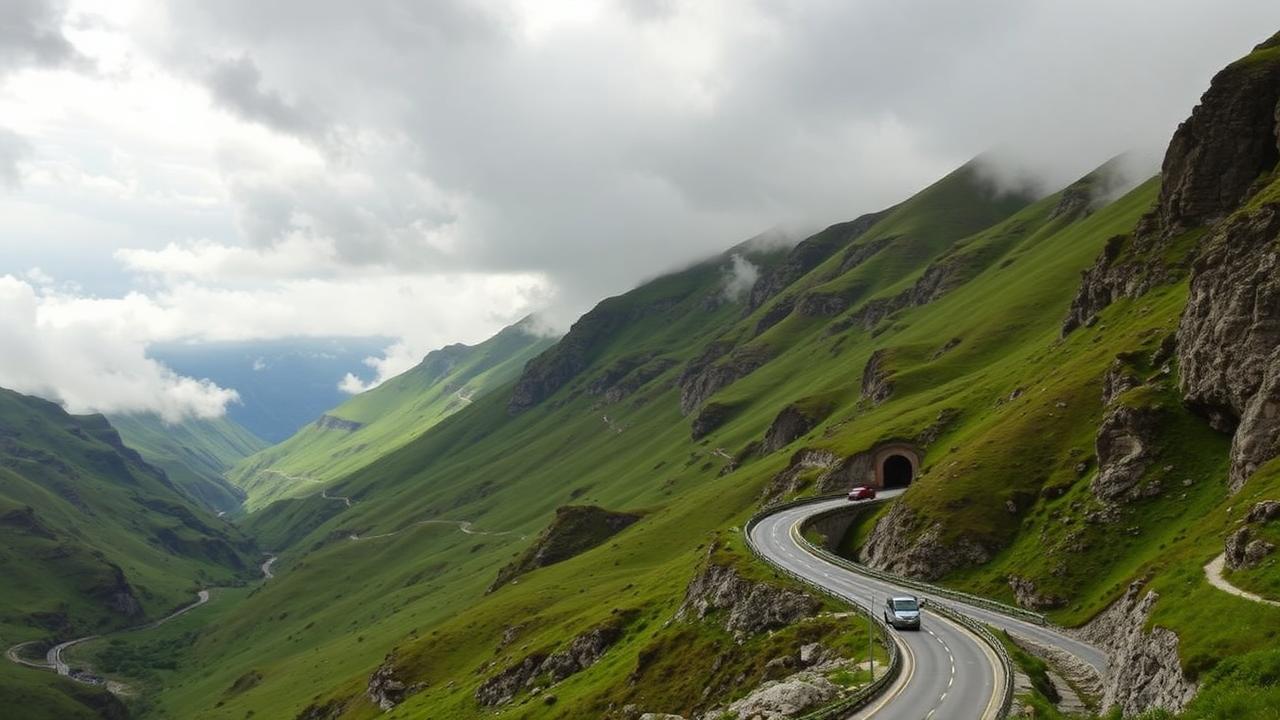
The only road between Tashkent and the Fergana Valley climbs to over 2,200 metres through a wall of mountains. It's one of the best drives in Uzbekistan — and the part of the trip travellers plan worst.
The Fergana Valley holds Uzbekistan's best ceramics, its best knives, its silk workshops and its most conservative, most densely populated countryside. Getting there means crossing the Kurama and Chatkal ranges — and for most travellers that means the Kamchik Pass.
Why this road exists at all
The valley is geographically sealed off from the rest of Uzbekistan by mountains, with the natural lowland entrances lying in Tajikistan. After independence, crossing another country to reach your own valley became impractical, so Uzbekistan built its way over the top. The Kamchik Pass road tops out at roughly 2,270 metres and is the country's main internal lifeline eastwards. The rail equivalent — the Angren–Pap line with its 19-kilometre tunnel, opened in 2016 — does the same job under the mountains.
Your two options
1. Train through the tunnel
- Tashkent to Kokand takes roughly four to five hours; Andijan and Margilan are further on the same line.
- Comfortable, air-conditioned, unaffected by snow on the pass.
- Cheap, and bookable in advance — see our train booking guide (/blog/tashkent-to-samarkand-train-booking-guide) for how the system works.
- You see almost none of the mountain scenery, because the best part is inside a tunnel.
2. Shared taxi over the pass
- Four to five hours to Kokand, depending on checkpoints and traffic.
- Departs when full from Tashkent's eastern taxi stands; pay for all four seats if you want to leave immediately or want space.
- Spectacular — this is the reason to choose the road.
- Uncomfortable if you're prone to motion sickness, and drivers can be fast on the descents.
Our honest recommendation: take the road out and the train back. You get the scenery once, without four hours of switchbacks in both directions.
What the drive is actually like
You leave Tashkent through flat industrial suburbs and coal country around Angren, then the road tilts up and everything changes. Green in spring, burnt gold by August, with long climbing curves, avalanche galleries, tunnels and a summit area with roadside stalls. The descent into the valley is the dramatic part — the land opens out into a huge, intensely cultivated basin.
Stops worth making
- Summit roadside stalls: honey, dried fruit, kurt and sometimes fresh trout.
- Viewpoints on the eastern descent — the classic photo of the road stacked in switchbacks.
- Kokand as your first valley stop, for the Khudayar Khan Palace (/blog/kokand-khudayar-khan-palace-fergana-valley-guide-2026).
Checkpoints and rules
There are police and security checkpoints on this route and vehicles are routinely stopped. Keep your passport accessible rather than buried in a bag — it is normal, quick and nothing to be nervous about. Drone flying along the pass is restricted; our drone guide covers where that applies (/blog/uzbekistan-drone-rules-photography-permits-2026).
Winter: the part people get wrong
Between roughly December and March the pass can close at short notice for snow, ice and avalanche control, sometimes for a day or more, and lorries queue for hours when it reopens. If you're travelling in winter, take the train — it runs under the weather. Booking a non-refundable hotel in Fergana around a winter road crossing is a genuinely bad plan.
What's on the other side
- Margilan — the Yodgorlik silk factory and atlas ikat weaving (/blog/margilan-yodgorlik-silk-factory-atlas-ikat-guide-2026).
- Rishtan — Uzbekistan's ceramics capital, workshops open to visitors (/blog/rishtan-ceramics-workshop-fergana-pottery-guide-2026).
- Chust — the knife-making town and home of the classic black doppi cap (/blog/chust-pichok-knife-fergana-valley-craftsmen-guide-2026).
- Kokand, Fergana and Andijan as bases; our valley guide has the full plan (/blog/fergana-valley-travel-guide).
Practical summary
- Best months: April to June and September to October.
- Allow four to five hours each way, either mode.
- Take motion sickness tablets if you're sensitive — this road earns them.
- Carry water and snacks; the summit stalls are informal and not always open.
- In winter, default to the train.
Three nights in the valley is enough to see silk being woven, pots being fired and knives being forged — and the Kamchik crossing turns the journey itself into part of the trip rather than dead time.