Isiriq and the Evil Eye: Uzbekistan's Everyday Superstitions
· 8 min read · Culture
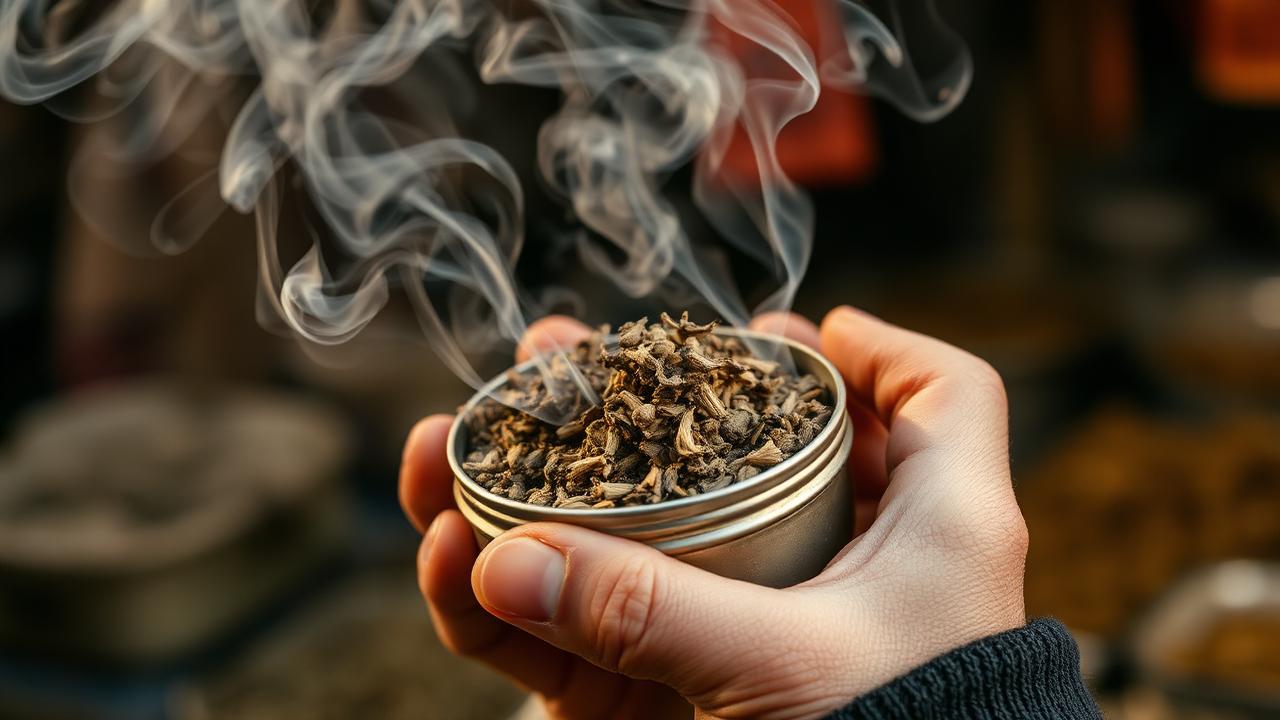
A child appears at your restaurant table holding a smoking tin, waves fragrant smoke around your head, and waits. You have just been protected from the evil eye — and yes, a small tip is expected.
Uzbekistan is a Muslim-majority country with a deep layer of pre-Islamic belief underneath, and nowhere is that layer more visible than in the small protective rituals people perform without thinking. The most famous of them fills the air of every bazaar in the country with a sharp, sweet, slightly medicinal smoke.
What is isiriq?
Isiriq (also written isiryk or hazorispand; adraspan in Kazakh and Kyrgyz) is the dried seed capsule of Peganum harmala — wild rue, or Syrian rue. The seeds are burned in a tin can or on a small brazier, producing thick, aromatic smoke. The smoke is waved around a person, a doorway, a shop counter, a new car or a newborn baby to drive away bad energy, illness and the evil eye.
- You will see it most in bazaars, at the entrances of shops, in maternity wards, at weddings and after a funeral.
- Children often walk restaurant tables and market rows with a smoking tin, offering a pass of smoke for 2,000–5,000 som.
- Bunches of dried isiriq hang above doorways year-round as passive protection.
- The plant genuinely has antibacterial properties, and the practice was long used as a folk disinfectant — it surged during the pandemic.
- The custom predates Islam in Central Asia and is usually traced to Zoroastrian fire-and-purification rites.
Koʻz tegdi — the evil eye
The core belief is simple: admiration can harm. Not out of malice — an envious or even an innocently intense compliment can 'touch' a person with the eye, especially a baby, a bride, a new business or anything conspicuously fortunate. The phrase is koʻz tegdi ('the eye has touched') in Uzbek, or sglazil in Russian.
This is why an Uzbek grandmother might respond to 'what a beautiful baby' with a slightly anxious expression and a muttered blessing. The correct thing to add is a religious deflection — mashallah (or tavba, or simply 'may God protect him'). Compliment plus blessing is safe; compliment alone is considered risky.
Other everyday beliefs you will actually encounter
The blue eye bead (koʻzmunchoq)
The blue-and-white nazar bead, familiar from Turkey and the Balkans, is everywhere here too — pinned inside a baby's clothing, hung from rear-view mirrors, sewn into suzani embroidery, stitched to a doorframe. If it cracks, it is said to have absorbed a hit and should be replaced.
Thresholds
Never stand on, sit on, or greet someone across a doorstep. The threshold belongs to the house spirits; handing objects or shaking hands over it is considered a bad idea. Step over it, then greet.
Bread
Non (Uzbek bread) is sacred. It is never placed upside down, never cut with a knife at home, never thrown away — leftover pieces go to birds or animals. Dropping bread means picking it up, kissing it, and touching it to your forehead.
Salt, whistling and money
- Do not whistle indoors — it 'whistles away' the household's money.
- Do not hand salt directly to a person; place it on the table for them to pick up, or it brings a quarrel.
- Do not give an empty wallet or purse as a gift — always put a coin or note inside.
- Do not step over a seated or lying person; it is said to stunt their growth or luck.
- Do not sweep the floor after dark or after a guest leaves — you sweep the good fortune out with the dust.
- Sitting down for a moment before a long journey is a shared Soviet-era ritual for a safe trip.
Weddings and babies
Newborns are often kept away from crowds for the first forty days (chilla). A bride's face may be smoked with isiriq before she leaves her family home. Flour and sweets are scattered at thresholds for prosperity. None of this is treated as superstition by the people doing it — it is simply what you do.
Nobody will tell you they believe in the evil eye. Everybody carries the bead.
How to respond as a visitor
- If someone waves isiriq smoke over you, smile, say rahmat, and hand over a small note. Refusing is fine too — a polite 'kerak emas, rahmat' works.
- Add mashallah after complimenting a child. It costs nothing and is genuinely appreciated.
- Accept a blue bead if it is given to you; it is a small blessing, not a sales pitch.
- Do not mock or 'debunk' the customs. Many people hold them alongside sincere Islamic faith and are aware of the tension.
- If you have asthma or smoke sensitivity, step back from isiriq — the smoke is strong and nobody will be offended.
Honest verdict
Isiriq smoke is the smell of an Uzbek bazaar as much as cumin and warm bread, and the beliefs around it are one of the most accessible windows into how this culture actually thinks about luck, family and protection. Learn three words — isiriq, koʻz tegdi, mashallah — and a lot of small daily gestures around you suddenly make sense.