Is Samarkand Actually Worth It? An Honest 2026 Verdict
· 8 min read · Trip Planning
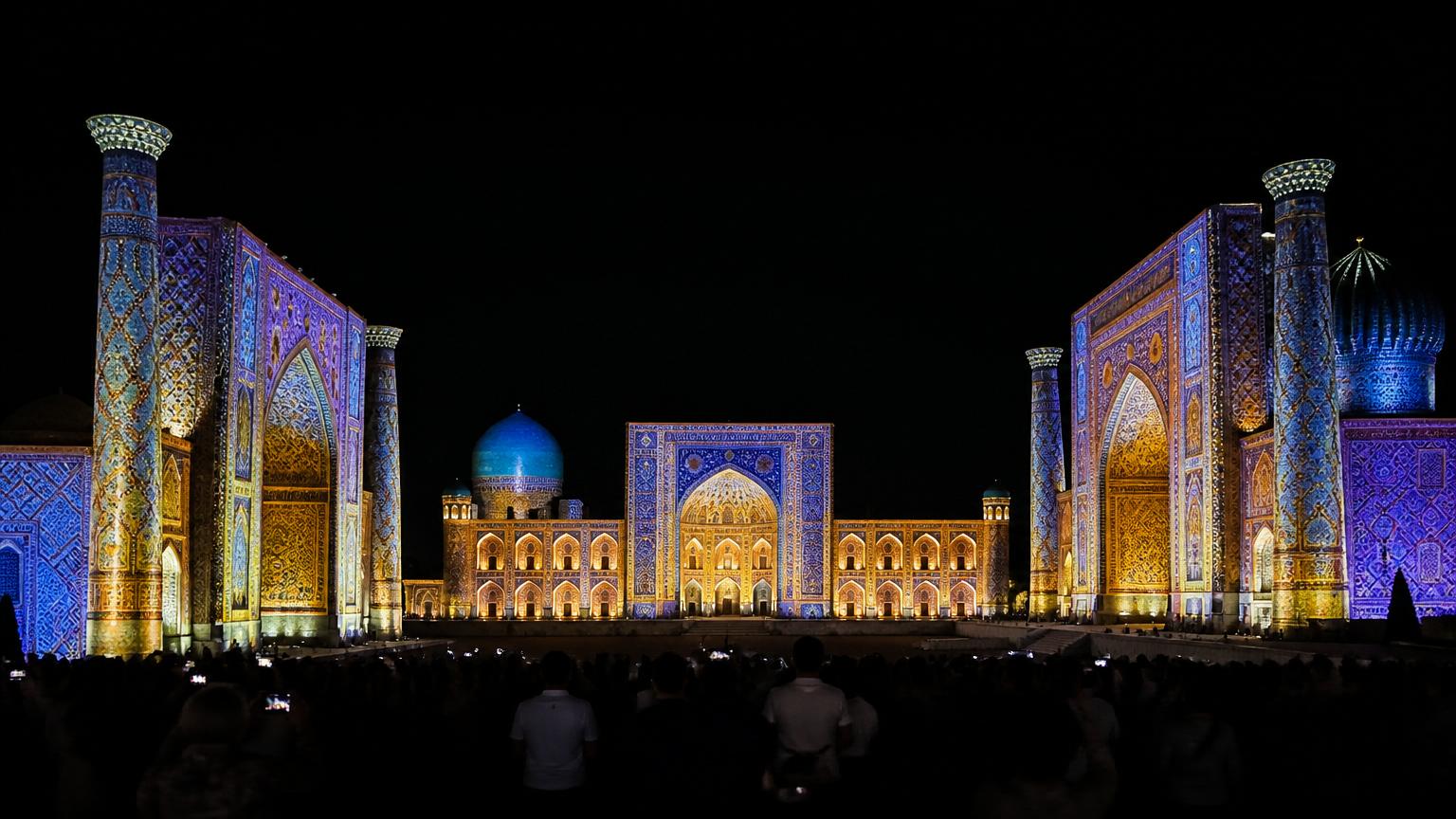
The most spectacular city in Uzbekistan is also the least atmospheric of the three Silk Road greats. Here is what is genuinely world-class, what disappoints people, and how to see it properly.
Samarkand is the reason most people come to Uzbekistan. It's also the city travellers argue about most, because the reality doesn't always match the photograph. Here's the honest assessment — what's genuinely world-class, what disappoints people, and how to see it so you get the first and not the second.
The case for: it deserves the fame
The Registan is not overrated. Three madrasas facing a single square, covered floor to dome in cobalt and gold tilework — there is nothing comparable in Central Asia and very little comparable anywhere. At sunset, and again after dark when the facades are lit, it earns every superlative.
Shah-i-Zinda is the one many travellers end up loving most: a narrow lane of tombs climbing a hillside, each doorway a different tile pattern, all of it at arm's length rather than viewed across a plaza. Go early — by mid-morning it's a queue.
Gur-e-Amir, Timur's mausoleum, is smaller than expected and better than expected: a fluted dome and an interior of gilded honeycomb vaulting. Ulugh Beg's Observatory is a ruin, and the reason to go is intellectual rather than visual — this is where a 15th-century prince-astronomer measured the stellar year to within a minute of the modern value.
And now the Imam al-Bukhari complex north of the city, hugely expanded in March 2026, gives Samarkand a genuine reason to leave the centre — see our guide at /blog/imam-al-bukhari-complex-samarkand-guide-2026.
The case against: what actually disappoints people
- The restoration is heavy. Much of what you photograph is 20th-century reconstruction over medieval bones. If your definition of authenticity requires original material, parts of Samarkand will feel like a very beautiful reproduction. Bukhara feels older and more lived-in.
- The monuments are separated by a modern city. Unlike Bukhara or Khiva, where you walk out of your guesthouse into the old town, Samarkand's highlights are spread across a large Soviet-planned city and you'll take taxis between them.
- The Registan area is heavily managed. Ticketing, security, occasional pressure to pay for rooftop access. It can feel more like visiting a monument than wandering a city.
The honest verdict
Yes — but give it two days, not one, and don't make it your only stop. Samarkand is the most spectacular city in Uzbekistan and the least atmospheric of the three Silk Road greats. Bukhara is the one you'll want to linger in; Khiva is the most completely preserved; Samarkand is the one that takes your breath away. You want all three, and you want Samarkand to be part of your trip rather than the whole of it.
If you have only a few days and must choose one: Samarkand for spectacle, Bukhara for atmosphere. Most people who visit both say Samarkand impressed them more and Bukhara is where they'd go back.
How to see it properly
- Two nights minimum. One night means a rushed day and the wrong impression.
- Registan twice — late afternoon for the light, after dark for the illumination. The second visit is what people remember.
- Shah-i-Zinda before 09:00, before the groups.
- Stay central, so you can walk to the Registan in the evening rather than negotiating a taxi.
- Get out of the centre once — the al-Bukhari complex about 25 km north, or Siab Bazaar in the morning for a living, unrestored Samarkand.
- The high-speed Afrosiyob from Tashkent takes about 2h08m, so arriving is easy; book ahead in peak season.
Bottom line
Samarkand is worth it. Just go in knowing you're visiting a magnificently restored monument-city rather than a preserved medieval town, give it two days, see the Registan at night, and pair it with Bukhara. Do that and it's the highlight of the trip. Rush it in a day and you'll wonder what the fuss was about.