Inside an Uzbek Wedding: Hundreds of Guests and Days of Celebration
· 9 min read · Culture
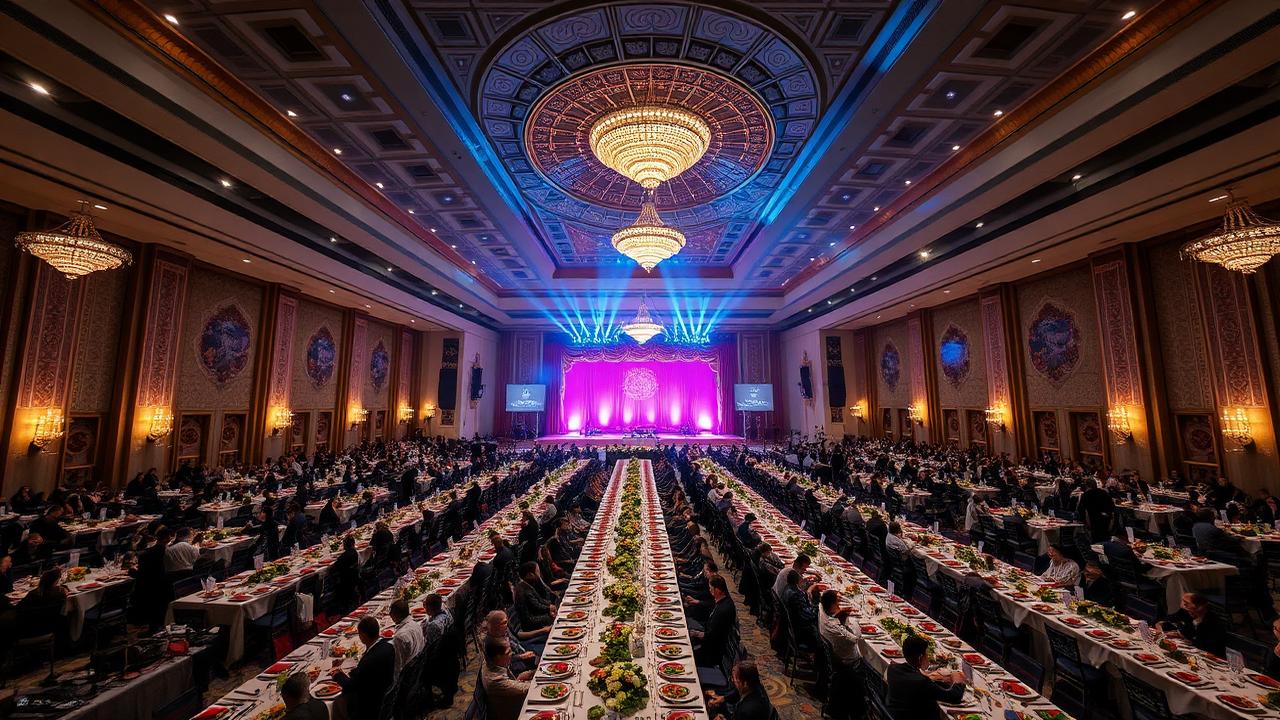
Six hundred guests. A banquet hall the size of an aircraft hangar. Plov served at seven in the morning to men who will be at work by nine. An Uzbek wedding is not an event — it is a week-long logistical operation involving an entire neighbourhood.
If you spend any time in Uzbekistan between March and November you will encounter a wedding. You will hear it before you see it — a convoy of white cars with ribbons, horns going continuously, a karnay horn blasting outside a hall. Weddings (toʻy) are the central social institution of Uzbek life, and their scale genuinely surprises visitors. This is a guide to the structure, the customs and the etiquette.
The scale, in numbers
- A typical urban wedding banquet hosts 300–500 guests. Large family or rural weddings routinely pass 800.
- The celebration is not one event but a sequence of four to six separate gatherings spread across days or weeks.
- Guest lists are obligation-based, not friendship-based: colleagues, neighbours, distant relatives and everyone who invited your family to their wedding.
- Total cost commonly runs $10,000–$30,000, and far more for wealthy families — often several years of household income.
- The state has periodically campaigned to limit wedding sizes precisely because families ruin themselves paying for them.
- Purpose-built wedding halls (toʻyxona) exist in every town, some seating over a thousand.
The sequence of events
1. Sovchilik — the matchmaking visit
The groom's female relatives visit the bride's family to propose. Historically the couple might barely know each other; today it is usually a formality performed after the couple has already decided, but the visit still happens and still matters.
2. Fotiha toʻyi — the engagement
The formal engagement party, held at the bride's home, where a blessing (fotiha) is read and the families exchange gifts. Trays of sweets, fabric, jewellery and non bread are carried in. This is when the marriage becomes public and effectively binding.
3. Nahor oshi — the morning plov
The most distinctive Uzbek wedding event, and the one most visitors find unbelievable. Between roughly 6:00 and 9:00 in the morning, hundreds of men — the neighbourhood, colleagues, relatives — gather to eat plov cooked overnight in enormous kazan cauldrons. There is tea, non, salad, a short blessing, and then everyone leaves for work. Women increasingly attend separate or joint morning plovs, but traditionally this was a men's gathering.
4. Nikoh — the religious ceremony
The Islamic marriage contract, performed by an imam, usually at a mosque or in the family home with close relatives only. Separately, the couple registers the marriage with the state at a ZAGS office — the legal step.
5. Kelin salom / the bride's departure
The groom's convoy collects the bride from her parents' house. This is the emotional core of the day: the bride says goodbye to her mother, often in tears, and the household performs blessings — flour on the threshold, isiriq smoke, sweets scattered. The convoy then drives around the city's monuments taking photographs, horns blaring, before arriving at the hall.
6. The toʻy — the main banquet
The evening event, four to six hours long, in a vast hall. Tables are pre-loaded with salads, fruit, nuts and bread; hot courses arrive in waves, ending with plov as the final dish — when plov appears, the evening is closing. There is a live band and singer, a master of ceremonies, endless toasts, and a dance floor that never empties. Guests come and go throughout; you are not expected to stay the whole time.
7. Kelin salom — the bride's greeting
The morning after, at the groom's family home, the new bride formally greets each member of her husband's family with a bow, and receives gifts and blessings in return. It marks her entry into the household.
Customs you will notice
- The karnay and surnay — long brass horns and reed pipes announcing the couple's arrival, loud enough to be heard blocks away.
- The couple sits on a raised stage rather than circulating; guests approach them to congratulate and photograph.
- Money is given in envelopes, and at some points cash is showered over the dancing couple.
- The bride is expected to look composed and serious rather than joyful for much of the evening — smiling constantly was traditionally considered improper. This is changing fast.
- Older guests often sit separately from younger ones; men and women may be seated on different sides in more conservative regions.
- The plov at the end is not dessert — it is the signal that the event is over.
You do not invite people to your wedding. You invite everyone who invited you to theirs — and their children will invite yours.
If you are invited as a foreigner
- Say yes. It is a genuine honour and one of the best cultural experiences available in the country.
- Bring an envelope with cash — 200,000–500,000 som is a normal guest contribution depending on your closeness to the family. Gifts are not typical.
- Dress up. Men: suit or at minimum shirt and jacket. Women: modest but formal — covered shoulders, knee-length or longer, no need for a headscarf at the banquet.
- Expect to be photographed, toasted, pushed onto the dance floor, and fed continuously. Refusing food repeatedly is mildly rude; taking a small amount of everything is the solution.
- Alcohol is served at most secular weddings but not at religious ones. Follow your table's lead.
- If asked to give a toast, keep it short, wish the couple health and children, and thank the parents by name if you can.
- You may leave after two or three hours without offence — many guests do.
Why the scale persists
The mahalla — the neighbourhood community — is the organising unit of Uzbek social life, and a wedding is where a family demonstrates its standing within it. Skimping is read as either poverty or disrespect, both of which have social consequences that outlast the party. Reform-minded Uzbeks debate this constantly, and there have been official attempts to cap guest numbers and event length, but the pressure of reciprocity is enormously strong. Every wedding you attend is a wedding you will one day have to repay.
Honest verdict
An Uzbek wedding is the most concentrated dose of this culture available in a single evening — food, music, family hierarchy, generosity and obligation all in one room, at maximum volume. If you get the invitation, go. And if you do not, stand outside a toʻyxona on a Saturday evening in May: you will still hear the karnay, and somebody will probably wave you in.