The New Imam al-Bukhari Complex Near Samarkand: A Complete 2026 Visitor Guide
· 8 min read · History
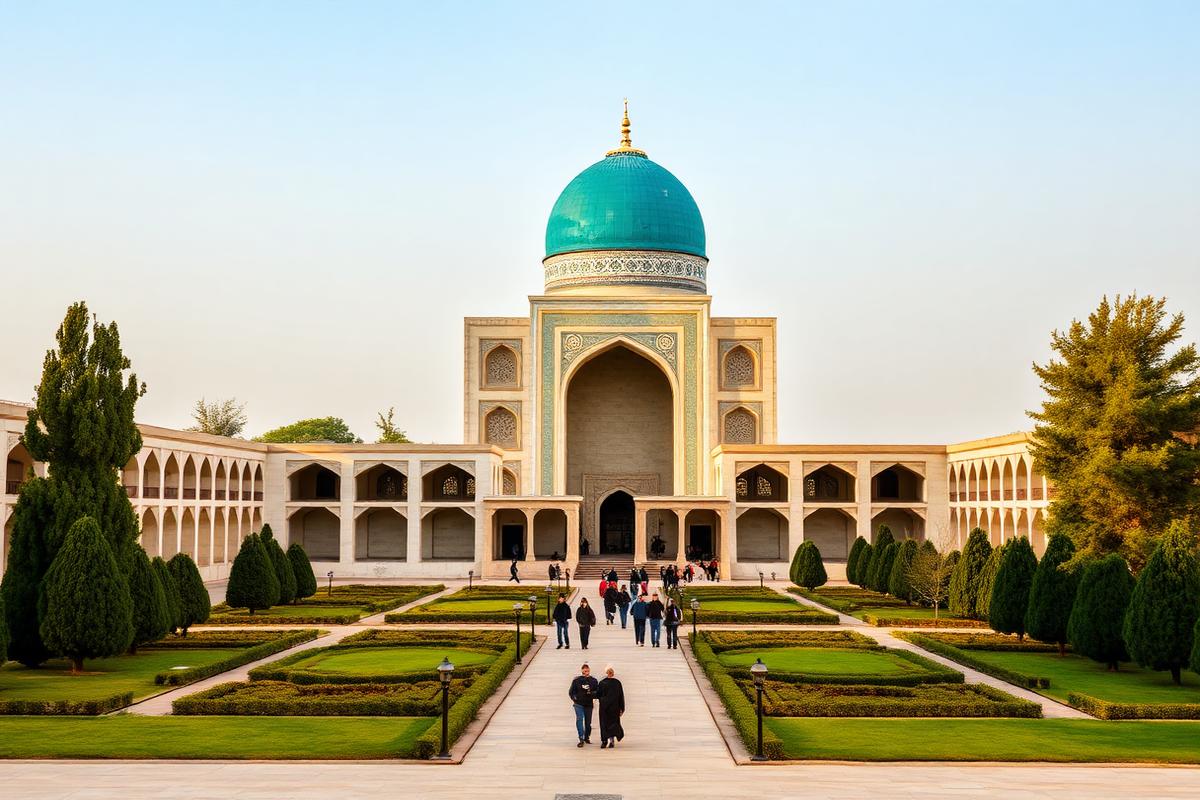
In March 2026 a grand new complex opened around the memorial of Imam al-Bukhari, 25 km north of Samarkand — the tomb of the scholar behind the most trusted hadith collection in the Sunni world.
In March 2026, within 48 hours of the Center of Islamic Civilization opening in Tashkent, a second major Islamic-heritage site was inaugurated near Samarkand: a grand new complex built around the memorial of Imam al-Bukhari. Together the two openings marked the moment Uzbekistan formally positioned itself as the global centre of Islamic heritage tourism — and this one is built around one of the most revered scholars in the entire Muslim world.
Who was Imam al-Bukhari?
Muhammad ibn Ismail al-Bukhari (810–870 CE) was born in Bukhara — hence the name by which the world knows him. He spent his life travelling the Islamic world collecting and rigorously verifying hadith: the sayings and actions of the Prophet Muhammad. By tradition he examined hundreds of thousands of reports and, applying an exacting standard of authentication, distilled them to the several thousand he judged sound. The result, Sahih al-Bukhari, is regarded across the Sunni Muslim world as the most authentic collection of hadith ever assembled — for many Muslims, the single most important Islamic book after the Quran itself. That scholarly reputation is why his name still carries extraordinary weight twelve centuries later, from Morocco to Indonesia.
He died in 870 CE near Samarkand and was buried at Hartang, in what is now the Chelak district about 25 km north of the city.
From modest shrine to major complex
A memorial has stood at the site since the late 1990s, when the original complex was built to mark the 1,225th anniversary (by the Islamic lunar calendar) of his birth. The 2026 expansion transformed it into a destination on a completely different scale: landscaped grounds, expanded prayer halls, exhibition and research space, and infrastructure designed to receive large numbers of international pilgrims rather than the modest flow the old site handled. The redevelopment reflects a deliberate strategy — connecting the scholar's tomb into the same Silk Road heritage circuit as Samarkand's Registan, Shah-i-Zinda and Gur-e-Amir.
What to see
- The mausoleum and memorial at the heart of the complex — the reason most pilgrims come, and a place of quiet reverence rather than spectacle.
- The mosque and prayer halls — active places of worship. Visit respectfully and be mindful of prayer times, when areas may be busy or briefly closed to visitors.
- Exhibition and manuscript space on al-Bukhari's life, his method of hadith verification, and the intellectual world of 9th-century Bukhara and Samarkand.
- The gardens and courtyards, designed for reflection, at their best in the softer light of early morning or late afternoon.
Practical guide (2026)
- Location: Hartang, Chelak district, roughly 25 km / about 40 minutes by car north of Samarkand.
- Getting there: easiest as a half-day taxi trip from Samarkand — negotiate a return fare with waiting time included — or as part of an organised Samarkand-region tour. There is no convenient public-transport route for most visitors, and ride-hailing coverage this far out of the city is unreliable.
- Entry: as a pilgrimage and worship site, entry to the grounds is typically free or low-cost; specific exhibition areas may charge. Confirm locally.
- Dress code: this is a working religious site. Cover shoulders and knees; women should bring a headscarf. Remove shoes where indicated.
- Time needed: 1.5–2 hours on site; roughly half a day including travel from Samarkand.
- Best time: early morning avoids both the heat and the tour-group peak; Fridays and Islamic holidays are busiest with worshippers.
- Combine with: a full Samarkand day — Registan Square, Shah-i-Zinda, Gur-e-Amir and the Ulugh Beg Observatory are all in or near the city.
Why it belongs on your itinerary
Most travellers to Samarkand never leave the city — and that's exactly why this is worth the trip. The new al-Bukhari complex connects the postcard architecture of the Registan to the living intellectual history that made this region matter in the first place. For Muslim visitors it is a place of genuine pilgrimage; for everyone else it is a window into why a scholar born in Bukhara is still a household name across half the world. In a year when Uzbekistan is deliberately building its identity around Islamic heritage, this is one of the two or three most significant new sites in the country.
Details such as entry arrangements can change; confirm locally or with a licensed Samarkand operator before visiting.