Gur-e-Amir & the Curse of Timur: The Tomb That Started World War II Rumours (2026 Guide)
· 10 min read · History
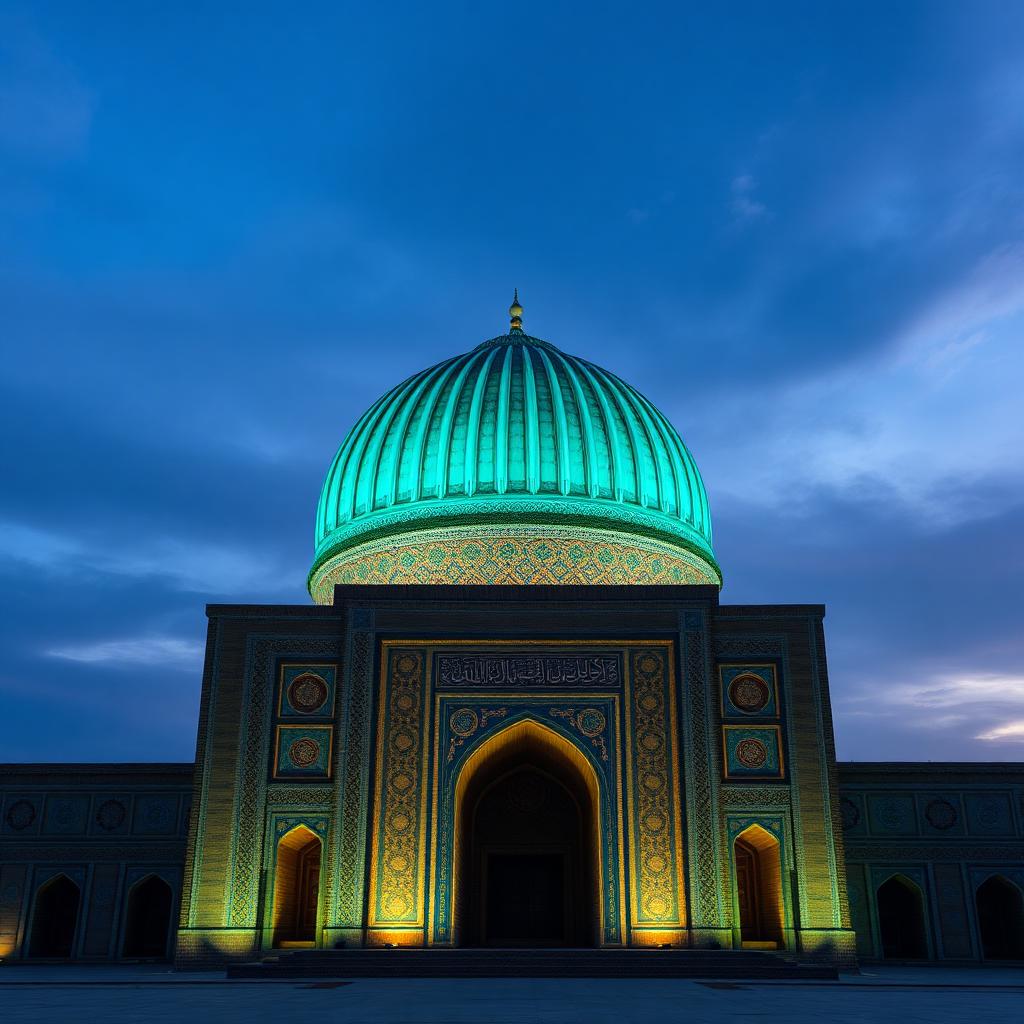
On 20 June 1941, Soviet archaeologists prised open Timur's tomb in Samarkand. Two days later, Hitler invaded the USSR. Locals still call it the Curse of Tamerlane — and 85 years on, the story sells the tomb to millions of visitors. Here is the 2026 guide.
Gur-e-Amir means 'Tomb of the King'. Under its ribbed turquoise dome lie Timur (Tamerlane, d. 1405), his sons Shah Rukh and Miran Shah, his grandson Ulugh Beg the astronomer, and his spiritual teacher Mir Sayyid Baraka. Every Uzbek schoolchild also knows the second story: that when Soviet anthropologist Mikhail Gerasimov opened Timur's coffin on 20 June 1941, an inscription warned 'Whoever opens my tomb shall unleash an invader more terrible than I.' Two days later Operation Barbarossa began. Coincidence or curse, the story has never left the building. This is the 2026 guide.
The building in one paragraph
Gur-e-Amir was commissioned in 1403 by Timur for his grandson and heir Muhammad Sultan, who died young in a campaign in Anatolia. When Timur himself died in Otrar in February 1405 on the way to invade China, the mausoleum became his tomb too. The 32-metre ribbed dome was finished by 1404; the exterior tile-work was refined for another decade. The building is one of the ancestors of the Taj Mahal — Timur's descendant Babur founded the Mughal empire, and his great-great-grandson Shah Jahan copied the ribbed-dome silhouette in Agra 240 years later.
The curse of Tamerlane
In June 1941, Stalin authorised Mikhail Gerasimov — the pioneer of facial reconstruction from skulls — to open Timur's coffin. On 20 June the marble jade lid was lifted. Three warnings were reportedly found: on the tomb, in the crypt, and inside the coffin. The famous inscription 'Whoever disturbs my tomb will unleash a more terrible invader than I' has never been fully authenticated but was widely reported at the time. On 22 June, Nazi Germany invaded the USSR. Gerasimov's reconstruction of Timur's face — the one you now see on every Uzbek banknote — was completed by November 1942. In November 1942 Stalin ordered Timur reburied with full Islamic rites at Gur-e-Amir; the very next month the German 6th Army was encircled at Stalingrad. Uzbeks call this the reversal of the curse.
What you actually see
- The main crypt with jade and marble cenotaphs. Timur's is the large dark green nephrite slab in the centre — reputedly the largest single piece of jade in the world.
- The real burial vault below (closed to visitors) where the actual bodies lie.
- The muqarnas gate with mosaic calligraphy signed by the master Muhammad ibn Mahmud Isfahani.
- The gilded interior ceiling — 3 kg of pure gold leaf was reapplied during 1996 restoration.
- A small museum room with photos of Gerasimov's 1941 excavation.
2026 tickets and hours
- Entry: 50,000 UZS (about $4).
- Open daily 9:00–19:00 (last entry 18:30). Ramadan hours: 9:00–17:00.
- Photography: free, no tripod. No flash inside crypt.
- English/Russian/French/German guide: 200,000 UZS for 45 min.
- Combined ticket with Registan and Bibi-Khanym: 150,000 UZS, valid 3 days.
Best time to visit
Blue hour, 30 minutes after sunset. The dome and portal are lit from beneath and photographed by 90% of Samarkand's Instagram accounts. For interior: first opening at 9:00 — sun angle through the door lights the jade cenotaph in gold for about 20 minutes. Avoid Friday 12:00–14:00 (prayer + local visitors).
Etiquette
- Cover shoulders and knees; women bring a scarf for the crypt.
- Remove shoes at the entrance to the burial chamber.
- Speak quietly — this is a working mausoleum, locals come to pray.
- Do not sit on or lean against the cenotaphs.
Combine with these
- Registan Square — 10 min walk north.
- Rukhabad mausoleum — 3 min walk, next to Gur-e-Amir.
- Ak-Saray mausoleum (little brother tomb) — 100 m north of Gur-e-Amir, free, almost always empty.
Honest verdict
Gur-e-Amir is smaller than most people expect and easily done in 30 minutes. But it is the single most historically loaded building in Uzbekistan — the tomb of the man who built Samarkand, the ancestor of the Mughals, and the subject of a 20th-century curse story that arguably shaped how the USSR reburied its dead. Come once at sunrise for the interior, once at blue hour for the exterior, and read Justin Marozzi's 'Tamerlane' the night in between.