The 45-Day Canal: How Uzbekistan Rewired the Fergana Valley by Hand
· 10 min read · History
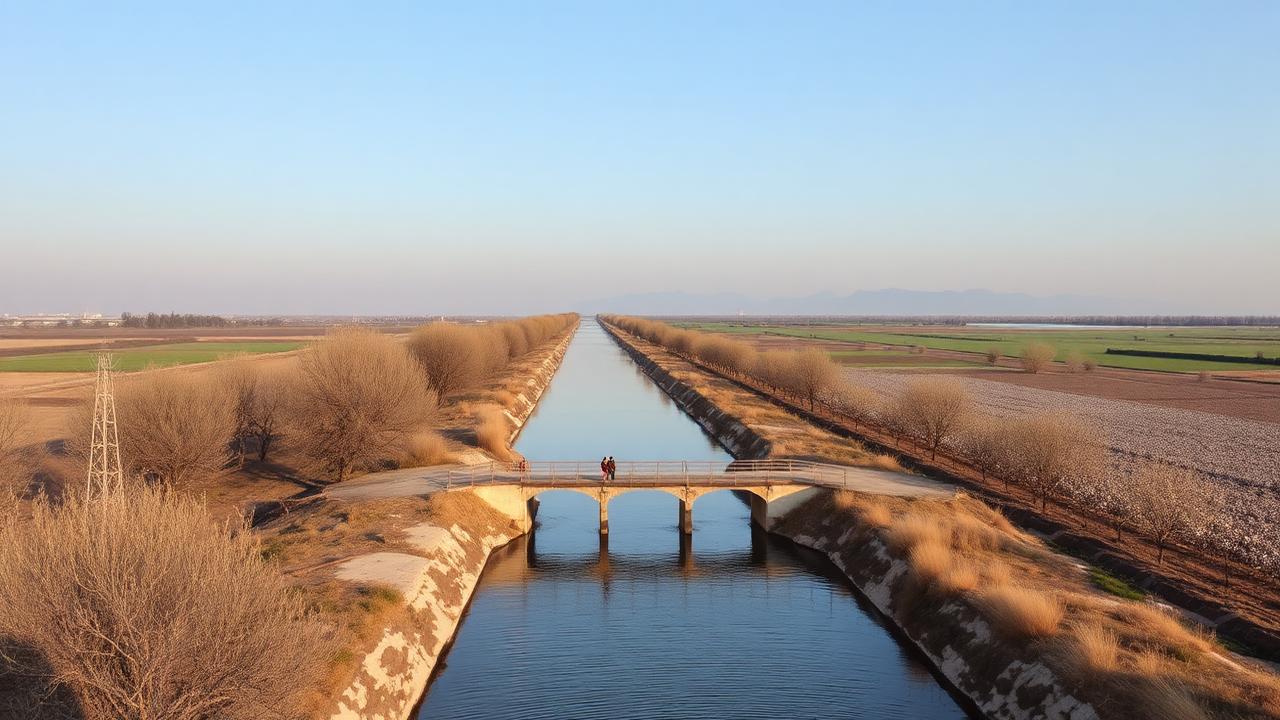
In 1939, roughly 160,000 people dug a canal across the Fergana Valley in just 45 days. Soviet propaganda called it voluntary heroism. The water transformed agriculture — and locked the region deeper into the cotton system.
The Great Fergana Canal is not visually dramatic in the way Registan is. It is a broad ribbon of water passing orchards, villages and roads. Yet it explains the modern valley: where towns grew, why cotton expanded, how collective labour was mobilised and why water politics still shapes daily life.
What happened in 1939
Soviet authorities mobilised around 160,000 collective-farm workers to dig the main canal in an astonishing 45 days. Much of the work used hand tools, baskets and human labour rather than heavy machinery. Contemporary films and posters presented the project as a joyful volunteer campaign and a triumph of socialist organisation.
The achievement and the coercion
Both parts of the story must be held together. The canal was an enormous engineering and organisational achievement that delivered water to fields and communities. But Stalin-era mobilisation was not a modern voluntary public works programme: collective farmers worked under political pressure, conditions were harsh, and official imagery erased fatigue, injury and dissent.
How water changed the valley
- Irrigated acreage expanded rapidly across one of Central Asia's most densely populated regions.
- Cotton production intensified as Moscow demanded fibre for the Soviet economy.
- New lateral canals, pumping stations and drainage networks followed the main channel.
- Orchards, rice, vegetables and household plots also depended on the new distribution system.
- Heavy irrigation contributed over time to salinisation, water losses and pressure on the Aral Sea basin.
Why it still matters in 2026
The canal remains working infrastructure, not a memorial. Farmers depend on timed allocations; hotter summers increase demand; ageing concrete and earthen sections lose water; and every upstream decision affects somebody downstream. Uzbekistan is modernising irrigation, but replacing a valley-scale system while it continues operating is slow and expensive.
Where a traveller can encounter the story
- Fergana city and Margilan make practical bases for drives through irrigated landscapes.
- The canal crosses roads and settlements across the valley; use safe public bridges rather than walking on maintenance banks.
- Local museums in the valley explain Soviet-era agriculture unevenly, so a knowledgeable regional guide adds context.
- Pair the canal story with a silk workshop in Margilan and a ceramics visit in Rishtan to see how water supports both farming and craft towns.
Do not treat it as a swimming attraction
Canals can have steep banks, strong currents, intake structures and sudden changes in flow. Photograph from bridges or public paths, never enter fenced hydraulic facilities, and do not encourage children or drivers to stop unsafely on narrow roads.
Honest verdict
The Great Fergana Canal is a landscape-sized historical document. It tells a more useful story about 20th-century Uzbekistan than many monuments: breathtaking collective capacity, coercive power, cotton wealth and ecological debt flowing in the same channel.