Essential Uzbek & Russian Phrases Every Traveler Should Know (2026)
· 12 min read · Practical
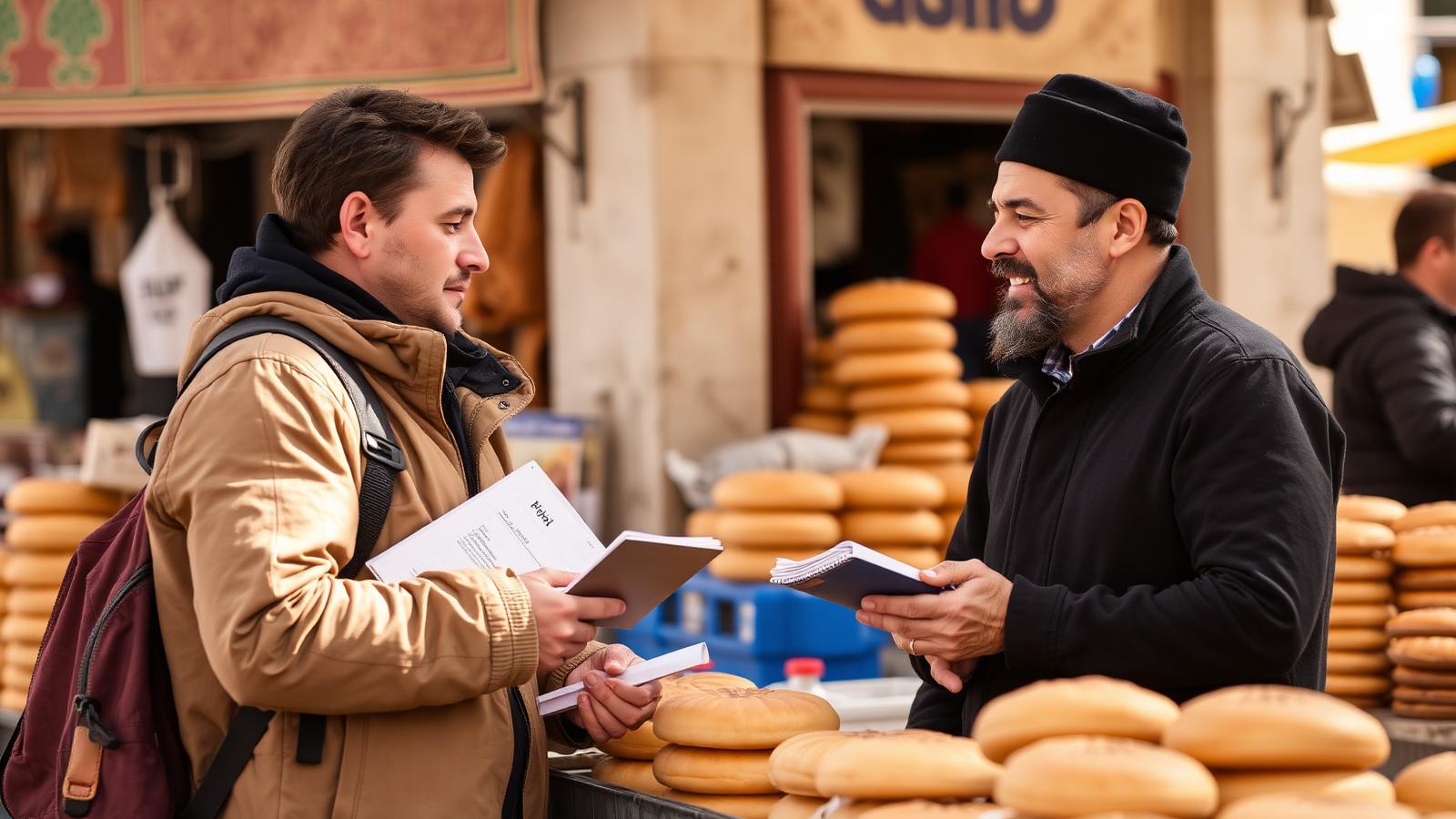
Twenty words change your trip. Say 'rahmat' to a bread seller and you get a discount; say 'skolko' to a taxi driver and the tourist price disappears. Here are the phrases worth learning, which language to use where, and how to actually pronounce them.
Uzbekistan runs on two languages. Uzbek is the state language, spoken by roughly 85% of the population and written today in a Latin alphabet that Western travelers can read on sight. Russian is the second language of the cities — about 18.5% of people speak it fluently, it dominates business and older generations, and it is often what a Tashkent taxi driver expects from a foreigner. English exists mostly among people under 30 and in hotels. Learning ten words of each will carry you through an entire trip.
Which language should you use where?
- Tashkent: Russian first, Uzbek warmly received, English common in hotels and cafés.
- Samarkand and Bukhara: Tajik is widely spoken at home; Uzbek and Russian both work in public.
- Fergana Valley, Khorezm, rural areas: Uzbek. Russian is thinner here.
- Karakalpakstan (Nukus, Muynak): Karakalpak and Russian.
- Under 30 anywhere: try English first — many young Uzbeks speak English, Korean, Turkish or German.
- Government offices and banks: Russian or Uzbek only.
Pronunciation in 60 seconds
- Uzbek 'x' = a throaty 'kh' (as in Bach). Xush kelibsiz = 'khush kelibsiz'.
- Uzbek 'oʻ' = like 'aw' in 'saw'. Oʻzbekiston = 'awz-bek-i-STON'.
- Uzbek 'gʻ' = a soft gargled g, close to French 'r'.
- Uzbek 'q' = a k made deep in the throat. Qancha = 'kancha'.
- Stress in Uzbek is almost always on the last syllable.
- Russian stress moves — the vowel that carries stress is the loud one; unstressed 'o' sounds like 'a'.
Greetings and courtesy
- Hello — Uzbek: Assalomu alaykum (as-sa-LO-mu a-lay-KUM) / Russian: Zdravstvuyte (ZDRAST-vuy-tye).
- Hi (informal) — Salom / Privet.
- Goodbye — Xayr (khayr) / Do svidaniya.
- Thank you — Rahmat (rah-MAT) / Spasibo (spa-SEE-ba).
- Thank you very much — Katta rahmat / Bolshoye spasibo.
- Please / you're welcome — Marhamat / Pozhaluysta.
- Yes / No — Ha / Yoʻq · Da / Nyet.
- Sorry, excuse me — Kechirasiz (kech-i-ra-SIZ) / Izvinite.
- My name is… — Mening ismim… / Menya zovut…
- Nice to meet you — Tanishganimdan xursandman / Ochen priyatno.
Numbers (the ones that save you money)
- 1–5 Uzbek: bir, ikki, uch, toʻrt, besh · Russian: odin, dva, tri, chetyre, pyat.
- 6–10 Uzbek: olti, yetti, sakkiz, toʻqqiz, oʻn · Russian: shest, sem, vosem, devyat, desyat.
- 20 / 50 / 100: yigirma / ellik / yuz · dvadtsat / pyatdesyat / sto.
- 1,000 — ming / tysyacha. Prices are usually spoken in thousands: 'yigirma ming' = 20,000 som.
- 10,000 — oʻn ming. 100,000 — yuz ming.
- Trick that works: ask 'Qancha?' then hold up fingers. Vendors will type the number into a calculator.
Shopping and bazaars
- How much? — Qancha? (kan-CHA) / Skolko? (SKOL-ka).
- Too expensive — Juda qimmat / Ochen dorogo.
- Cheaper, please — Arzonroq boʻladimi? / Podeshevle mozhno?
- I'll take it — Olaman / Ya voz'mu.
- I'm just looking — Faqat koʻryapman / Ya prosto smotryu.
- Do you take cards? — Karta bilan toʻlasa boʻladimi? / Kartoy mozhno?
- No, thank you — Kerak emas, rahmat / Ne nado, spasibo.
Taxis, directions and transport
- To the centre, please — Markazga, iltimos / V tsentr, pozhaluysta.
- How much to…? — …gacha qancha? / Skolko do…?
- Stop here — Shu yerda toʻxtating / Ostanovite zdes.
- Where is…? — … qayerda? / Gde…?
- Metro station — Metro bekati / Stantsiya metro.
- Train station — Temir yoʻl vokzali / Vokzal.
- Airport — Aeroport (same in both).
- Left / right / straight — Chapga / oʻngga / toʻgʻriga · Nalevo / napravo / pryamo.
- I've ordered a Yandex — Men Yandex chaqirdim / Ya vyzval Yandex.
Food and restaurants
- The menu, please — Menyu, iltimos / Menyu, pozhaluysta.
- Water — Suv / Voda. Still: gazsiz / bez gaza. Sparkling: gazli / s gazom.
- Tea — Choy (green: koʻk choy; black: qora choy).
- Bread — Non (the round tandoor loaf; never place it upside down).
- I don't eat meat — Men goʻsht yemayman / Ya ne yem myaso.
- Not spicy — Achchiq emas / Ne ostro.
- Delicious! — Juda mazali! / Ochen vkusno!
- The bill, please — Hisob, iltimos / Schyot, pozhaluysta.
- Thank you for the meal — Rahmat, juda mazali edi.
Emergencies and health
- Help! — Yordam bering! / Pomogite!
- I need a doctor — Menga shifokor kerak / Mne nuzhen vrach.
- Pharmacy — Dorixona / Apteka.
- Hospital — Kasalxona / Bolnitsa.
- Police — Politsiya (102). Ambulance — Tez yordam (103). Universal emergency: 112.
- I'm lost — Men adashib qoldim / Ya zabludilsya.
- I lost my passport — Pasportimni yoʻqotdim / Ya poteryal pasport.
- Call the tourist police — Sayyohlik politsiyasini chaqiring (+998 71 233 09 15).
Small words with big social value
- Xush kelibsiz — welcome. You'll hear it constantly; smile and say rahmat.
- Yaxshimisiz? — how are you? Answer: Yaxshi, rahmat.
- Mehmon — guest. In Uzbek culture the guest is close to sacred; being called mehmon is a compliment.
- Osh / plov — say 'osh' rather than 'plov' in the Fergana Valley and watch faces light up.
- Ramazon muborak / Hayit muborak — festival greetings, used generously.
- Zoʻr! — awesome! The single most useful slang word in the country.
Apps and practical tips
- Google Translate: download Uzbek and Russian for offline use before you fly.
- Yandex Translate handles Russian better and works well on spoken input.
- Uzbek Latin script is readable — street signs, menus and metro maps are navigable with no study at all.
- Older signage and many official documents still use Cyrillic; learning the Cyrillic alphabet (a two-hour job) helps enormously.
- Type prices into your phone calculator and show the screen — universal, instant, no accent required.
Honest verdict
You don't need to study a language to travel Uzbekistan — hospitality does most of the work. But the return on twenty words here is higher than almost anywhere else in the world. 'Assalomu alaykum' at a doorway, 'rahmat' at a bread stall, 'qancha' at a bazaar, and you'll spend the trip being treated as a guest instead of a customer.