The China–Kyrgyzstan–Uzbekistan Railway: The Line That Redraws the Silk Road (2026)
· 10 min read · Transport
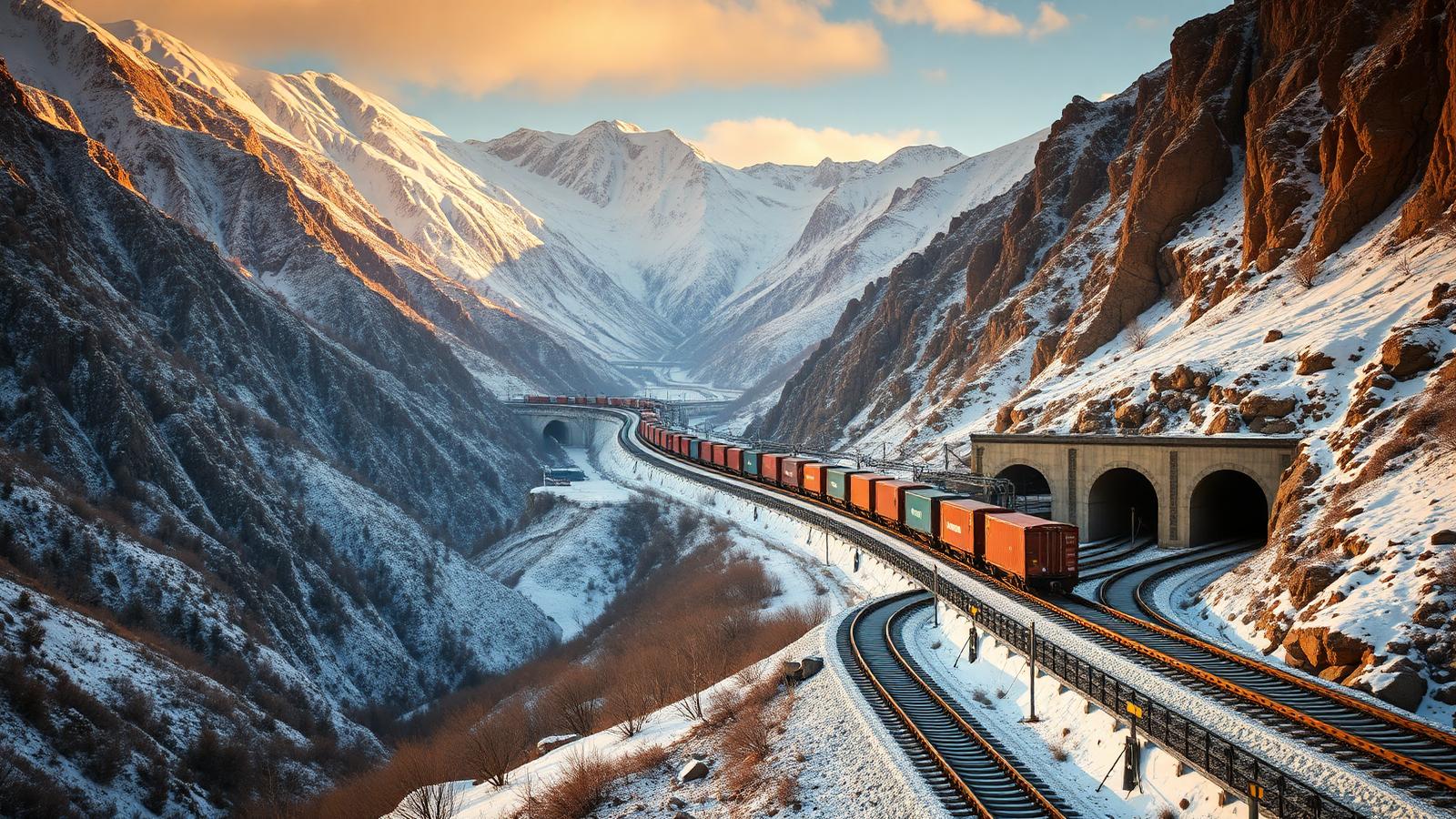
For thirty years it was a map on a wall. Now tunnels are being bored through the Tian Shan for a railway that connects western China to Uzbekistan without touching Russia — and it changes what the Silk Road means in 2026.
The China-Kyrgyzstan-Uzbekistan railway, universally shortened to CKU, was first proposed in the 1990s and then argued about for a generation. Construction finally began, and by 2026 it is the single most consequential infrastructure project in Central Asia. It matters to freight companies, to geopolitics, and — eventually — to anyone who wants to travel overland from China to Uzbekistan. Here is what is actually true about it, stripped of the press-release language.
What the route actually is
The line runs from Kashgar in China's Xinjiang region, crosses into Kyrgyzstan at the Torugart pass area, threads through the mountains via Makmal and Jalal-Abad, and enters Uzbekistan's Fergana Valley at Andijan, where it joins the existing Uzbek network that already runs through the Kamchiq tunnel to Tashkent and onward to Samarkand, Bukhara and the Turkmen and Afghan borders.
The Uzbek side is the easy part: Andijan has been rail-connected to the rest of the country since the Angren-Pap line and its 19 km Kamchiq tunnel opened, ending the Fergana Valley's rail isolation. The hard part is the middle — roughly 300 km of Kyrgyz mountain railway needing dozens of tunnels and viaducts at altitudes where construction seasons are short.
The gauge problem nobody mentions in the headlines
China uses 1,435 mm standard gauge. The former Soviet network — Kyrgyzstan, Uzbekistan, Kazakhstan — uses 1,520 mm Russian gauge. A train cannot simply roll from one to the other. The CKU design resolves this with a transfer point where containers are craned across or bogies are swapped, plus a section of standard gauge on the Chinese side of the border. It adds hours and cost to every load, and it is the main reason sceptics argue the line will never beat the existing Kazakhstan route on price.
Why it exists: the route that avoids Russia
Almost all China-to-Europe rail freight has historically travelled the northern corridor through Kazakhstan and Russia. Since 2022 that route has carried political and insurance risk that many shippers no longer want. The CKU is the missing link in the so-called Middle Corridor, which runs China to Central Asia, across the Caspian by ferry to Azerbaijan, then through Georgia and Turkey to Europe. It cuts an estimated 900 km and several days off the journey to the Middle East and southern Europe compared with the northern route.
The CKU is not really a railway project. It is a decision about which country's territory Central Asia's trade depends on.
Cost, funding and timeline
- Total cost estimates for the Kyrgyz section cluster around 4.7 billion US dollars, the overwhelming share of the whole project.
- It is financed through a joint venture company owned by the three states, with Chinese loans and equity carrying most of the burden.
- Ground was broken in late 2024 after a trilateral agreement; heavy tunnelling has been the focus since.
- Official completion targets sit around 2030, and independent engineers consider even that optimistic given the terrain.
- Kyrgyzstan's debt exposure to Chinese lenders is the most-debated part of the deal inside the region.
What it means for Uzbekistan
Freight
Uzbekistan is double landlocked — one of only two countries on earth where you must cross two borders to reach an ocean. Every improvement in overland routing is disproportionately valuable here. A direct Chinese rail connection shortens supply chains for the country's fast-growing assembly industries and gives Uzbek exporters, especially fruit and textiles, a faster path east.
The Fergana Valley
Andijan becomes a border-trade node rather than a terminus. Expect the valley's cities — Andijan, Fergana, Namangan, Kokand — to see logistics investment, and expect hotel capacity there to rise well before tourism does.
Tourism, honestly
Passenger service is not the point of this line and is not funded as a priority. If a through passenger train from Kashgar to Andijan ever runs, it will come years after freight and will depend on a visa and border regime that does not exist yet. Do not plan a 2027 trip around it.
How to travel the corridor today, in 2026
- Overland China to Kyrgyzstan is possible by road through the Torugart or Irkeshtam passes with the correct permits, usually arranged through an agency in Kashgar or Osh.
- From Osh, shared taxis and buses reach the Dostyk crossing into Andijan; the border is open to third-country nationals.
- Inside Uzbekistan, the Tashkent-Andijan and Tashkent-Margilan trains through the Kamchiq tunnel are comfortable, cheap and bookable online.
- Allow a full day for the Kyrgyz-Uzbek crossing in either direction and carry small US dollar notes for the transfer taxis.
The honest verdict
The CKU will not open next year, and when it does it will move containers rather than tourists. But it is the clearest signal yet of a Central Asia that trades east and west rather than only north — and Uzbekistan, sitting at the far end of the new line with its own rail network already built out, is the country best positioned to gain.