Chilpyk Dakhma: Standing Inside a 2,000-Year-Old Zoroastrian Tower of Silence (2026 Guide)
· 9 min read · Hidden Gems
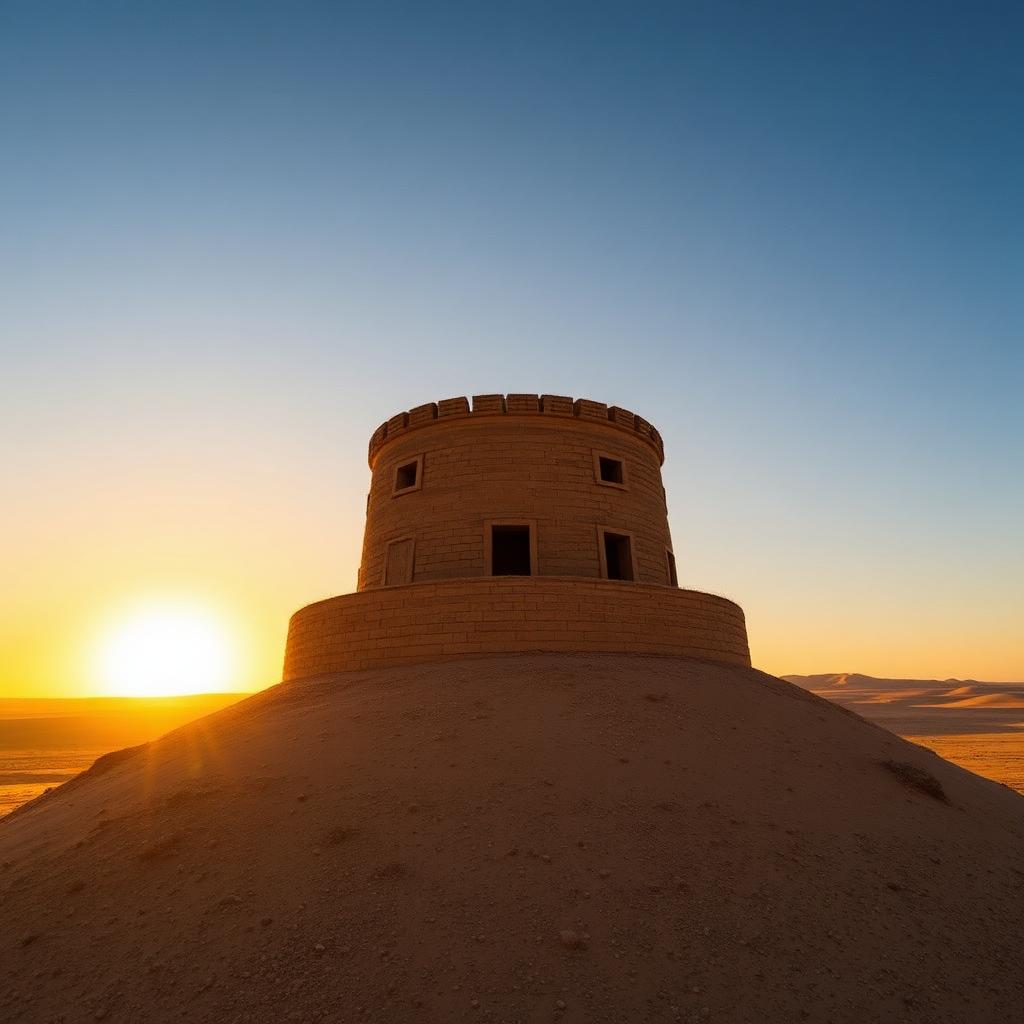
On a lone hill above the Amu Darya stands a circular brick wall where, two thousand years ago, Zoroastrians laid out their dead to be picked clean by vultures. You can still climb inside it. Here's the 2026 guide.
Forty-five kilometers south of Nukus, on a 35-meter natural hill rising abruptly out of flat steppe, you can see Chilpyk Dakhma from 10 km away — a perfect circle of mud-brick wall on top of an otherwise empty mound. It is one of the best-preserved Zoroastrian dakhmas (towers of silence) in Central Asia, about 2,000 years old, and you can climb to the top and walk inside. This is the 2026 guide.
What is a dakhma?
In Zoroastrianism, the corpse is considered ritually impure — it cannot pollute the sacred elements of earth, fire, or water. Instead, the dead were placed on circular elevated platforms (dakhmas, literally 'towers of silence'), exposed to the sun and to vultures, who would strip the bones clean within hours. The clean bones were later collected and stored in ossuaries (astodans) — many of which survive in regional museums. The practice is still performed today by the Parsi community in Mumbai, though Iranian Zoroastrians stopped it in the 1970s.
Chilpyk's history
Chilpyk Dakhma was built between the 1st century BCE and the 1st century CE by the ancient Khorezmian civilization, when this region was a major center of pre-Islamic Iranian religion. The outer wall is 65–79 meters in diameter, originally 15 meters tall (now 8–10), and 5 meters thick at the base. After Zoroastrianism faded with the Islamic conquest in the 8th century, the structure was repurposed as a watch fort and later as an ossuary repository. Excavations have recovered hundreds of bone fragments and ceramic astodans dating from the 1st to 8th centuries CE.
The symbol on the 200 som banknote
Locals will proudly point this out: Chilpyk is depicted on the back of the Karakalpak-era Uzbek 200 som banknote. The image has made the dakhma a quiet national symbol of Karakalpakstan's pre-Islamic heritage.
What you actually see
A steep dirt path zigzags up the hill — about 8 minutes of climbing. At the top: a complete circular wall of compressed loess and mud-brick, with a single low entrance on the southwest side. Inside the circle: empty packed earth, no roof, just open sky. From the wall you can see the Amu Darya snaking south, the Sultan Uvays Dag mountains east, and on a clear winter day the Kyzylkum desert all the way to the horizon. It's silent up there. Even the wind feels older.
How to get there in 2026
- Taxi from Nukus: 45 km south on the Buxoro road, 50 minutes, round trip with 1 hour waiting around 250,000 UZS ($21).
- Yandex Go from Nukus: book one-way ~120,000 UZS, but no return availability — pre-arrange with the driver to wait.
- Day tour from Nukus combining Chilpyk + Mizdakhan: $50–70 per person.
- Self-drive: paved road the entire way, parking at the base of the hill is free.
- Public transport: not really feasible — no marshrutka stops here.
2026 tickets and hours
- Entry: 15,000 UZS ($1.30) at the small kiosk at the base of the hill.
- Open: sunrise to sunset year-round.
- No guide on site — bring your own from Nukus if you want context (Karakalpak Tourism Information Center arranges English/Russian guides for 200,000 UZS half day).
- No toilets, no café, no shade — bring water, sunscreen, a hat.
Best time to visit
Sunrise and the golden hour before sunset are extraordinary — the mud-brick wall turns deep orange, vultures still circle overhead (the population around Chilpyk recovered after a 1990s collapse), and you usually have the entire site to yourself. Avoid midday June–August (45°C+, zero shade). Spring (April–May), late September, and October are ideal. Winter is dramatic but the wind off the steppe is brutal.
Photography tips
- Wide angle (16–24 mm) captures the full circle from the rim.
- Drone photography is technically allowed here, but you need the standard Uzbekistan drone permit (see our drone rules guide).
- Best aerial shot: hover 60 m above the center looking straight down — the perfect circle is unforgettable.
- Inside the circle, a 35 mm or 50 mm captures the curve of the wall against sky.
- For human scale, place a companion on the wall — it makes the size legible.
Etiquette
- This is a heritage monument and former burial site — be respectful, don't picnic inside the circle.
- Do not remove pottery shards or bone fragments if you find any — they are protected antiquities and customs will catch them.
- Don't carve names on the walls. Visitors have been fined.
- Locals occasionally come for quiet contemplation — give them space.
Combine with these nearby
- Mizdakhan necropolis (40 km west of Nukus) — same morning if you start early.
- Savitsky Museum in Nukus — afternoon.
- Moynaq Aral Sea ship cemetery — next day, 4 hours from Nukus.
- Ayaz Kala desert fortresses — 2.5 hours east on the way to Khiva.
Honest verdict
Chilpyk is one of those sites that wouldn't justify the trip on its own, but added to a Karakalpakstan loop (Nukus → Mizdakhan → Chilpyk → Moynaq → Ayaz Kala → Khiva) it becomes unforgettable. Standing inside a 2,000-year-old open-sky funeral platform, with vultures circling and the Amu Darya silver in the distance, is the kind of moment Uzbekistan absolutely delivers — once you leave the Silk Road postcard route.