Bukhara vs Khiva: Which Silk Road City Should You Choose in 2026?
· 9 min read · Trip Planning
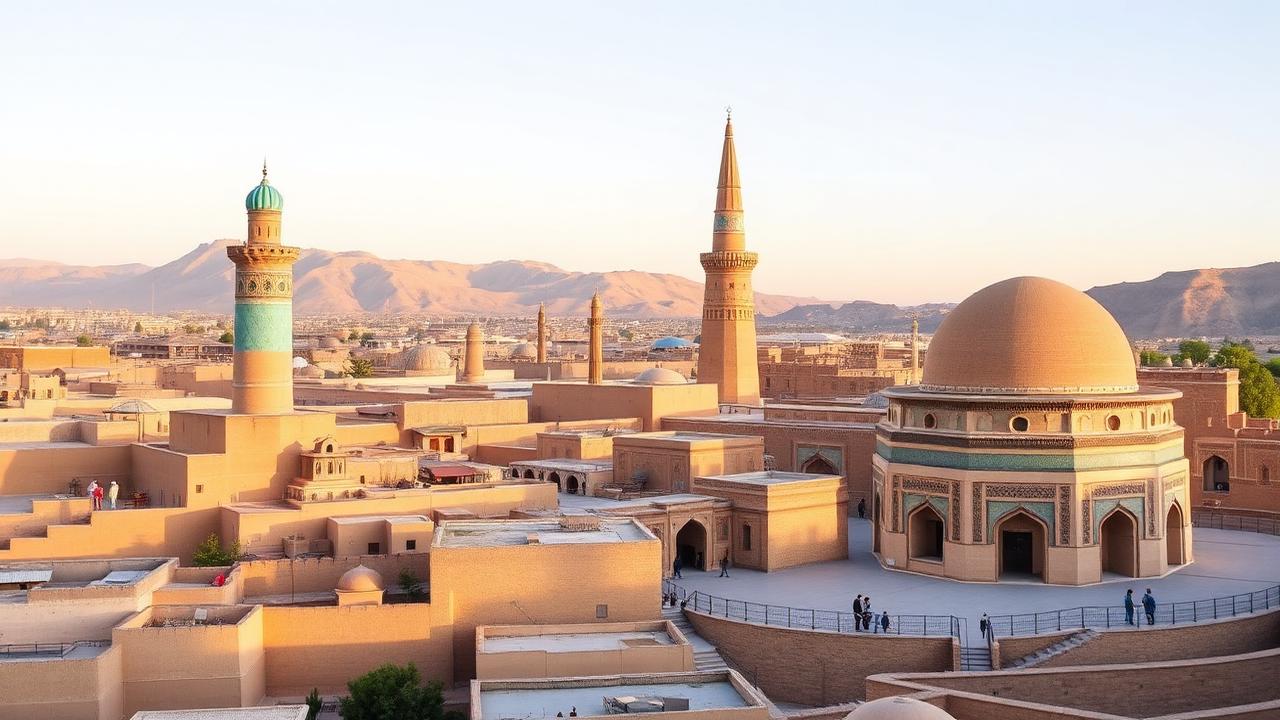
Bukhara is a living city with a medieval core; Khiva is a walled museum you can walk end to end in twenty minutes. Both are extraordinary. Here's how to choose.
Almost every Uzbekistan itinerary reaches a point where something has to go, and the choice usually lands between Bukhara and Khiva. This is the honest comparison, written for people who have to pick one.
The one-line difference
Bukhara is a working city with a medieval heart still doing business. Khiva is an intact walled town, beautifully restored, closer to an open-air museum than a neighbourhood. Which sounds better to you is genuinely most of the answer.
Size and how long you need
- Khiva's Itchan Kala is roughly 650 by 400 metres. One full day covers the highlights; two nights lets you see it empty at dawn and lit at night.
- Bukhara's old town is several times larger and spread over walkable but distinct districts. Two full days is the realistic minimum, three is comfortable.
If your remaining time is one night, Khiva gives more complete satisfaction. If you have three days, Bukhara rewards them more.
Atmosphere
Khiva at midday, with tour groups funnelling down one main street, can feel staged. Khiva at 06:30 or after 21:00, when day-trippers have gone and the walls are lit, is one of the most atmospheric places in Central Asia — which is exactly why staying overnight inside the walls matters so much here (/blog/khiva-night-walk-lantern-old-city-2026).
Bukhara never has that emptying-out effect because people live and work there. You get bread being baked, children cycling past the trading domes, and men playing backgammon by Lyabi-Hauz in the evening. It feels less perfect and more alive.
Monuments
Khiva's strengths
- Everything is inside one wall — no transport, no planning, just walking.
- Kalta Minor, the stubby turquoise minaret, is unlike anything else in the country.
- The Kunya Ark and Juma Mosque's forest of carved wooden columns.
- A single combined ticket covers most sites inside Itchan Kala.
Bukhara's strengths
- The Ark fortress and the emirs' history behind it (/blog/bukhara-ark-fortress-emirs-dungeon-guide-2026).
- Poi Kalyan — minaret, mosque and madrasa in one square.
- The Samanid Mausoleum, 10th century and arguably the finest brickwork in Central Asia.
- Chor Bakr necropolis, Bahauddin Naqshband's Sufi shrine, the Jewish quarter and a working hammam — layers Khiva simply doesn't have.
Food
Bukhara wins comfortably. It has more restaurants, more range, courtyard settings and a stronger local dining scene. Khiva's food is fine but limited, and options thin out sharply in the evening inside the walls.
Shopping and crafts
Bukhara's trading domes are the historic centre of the craft trade — carpets, suzani, scissors, miniature painting (/blog/uzbek-carpets-bukhara-khiva-rugs-buying-guide-2026). Khiva sells good woodcarving and Khorezm-style textiles but with less depth and more repetition between stalls.
Getting there — the 2026 change
This used to settle the argument in Bukhara's favour. Khiva was a punishing overnight or a long desert drive, so people cut it. Since May 2026 a direct high-speed service reaches Khiva from Tashkent in about 7h40m, running roughly three days a week (/blog/tashkent-khiva-bullet-train-direct-2026). Bukhara remains far easier — a fast train from Tashkent in around four hours, daily, and about 1h30m from Samarkand.
The practical catch is that Khiva's limited service days can dictate your whole itinerary, so book that leg first and build around it.
Crowds and cost
Khiva concentrates its visitors into a small area between roughly 10:00 and 16:00, so it feels busier than its visitor numbers suggest. Bukhara absorbs crowds. Accommodation is similar in price; Khiva's inside-the-walls guesthouses cost a premium and are worth it purely for the early morning.
Who should choose which
- Choose Khiva if: you have limited time, want one concentrated wow, love photography, or are travelling with children who tire of walking between sites.
- Choose Bukhara if: you want depth, better food, real street life, craft shopping, and a city you can settle into for three days.
- Choose Bukhara if your dates don't line up with the Khiva train — the desert road transfer is long.
The answer most people should take
If you are choosing one, choose Bukhara. It gives more per day and it's far easier to reach. If you can find three extra days, do both, in the order Tashkent → Samarkand → Bukhara → Khiva, then fly back from Urgench. That sequence builds from imperial grandeur to intimate old town to walled fortress and never repeats itself. For the other classic dilemma, see Bukhara vs Samarkand (/blog/bukhara-vs-samarkand-which-to-visit-first).