Bukhara's Jewish Quarter: A Forgotten Silk Road Heritage (2026)
· 10 min read · Culture
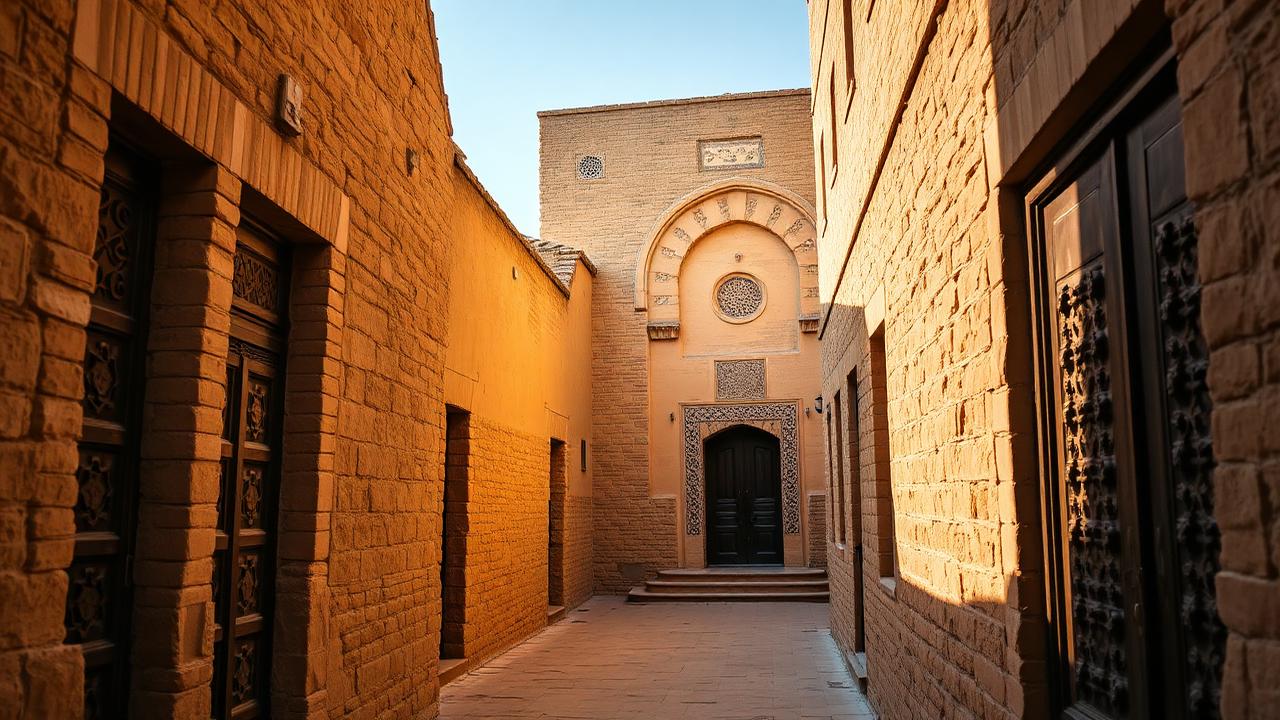
Once home to 13,000 Bukharan Jews, Bukhara's old mahalla is now a quiet quarter of locked synagogues and fading Hebrew inscriptions. Here's the honest 2026 guide to its history and what you can still see.
For nearly two millennia, the Jewish community of Bukhara — the Bukharan Jews — was one of the oldest and most isolated Jewish populations in the world. They spoke their own dialect of Persian (Tajik) written in Hebrew script, wove world-famous silk carpets, and built synagogues that stood alongside mosques and madrasas in Bukhara's old town. By the 1980s, 13,000 Jews lived in Bukhara's dedicated mahalla (Jewish quarter). Today, fewer than 100 remain. The quarter itself, however, is still there — and walking through it is one of the most moving experiences in Uzbekistan.
Where is the Jewish Quarter?
The Jewish mahalla sits in the western part of Bukhara's old city, between the Lyabi-Hauz pond complex and the Ark fortress. It is not a gated neighborhood — it blends into the old town, marked by old synagogues, Hebrew gravestones, and Jewish symbols carved into door lintels. Most visitors walk right through it without realizing. The key landmarks are the Magoki Attori synagogue, the old Jewish cemetery near the Ark, and the former homes of prominent Jewish families along the narrow alleys west of Lyabi-Hauz.
Magoki Attori: the oldest synagogue in Central Asia
Magoki Attori (also called the Bukhara Synagogue or old Jewish house of prayer) is the oldest surviving synagogue in Central Asia, with parts of the building dating to the 16th century, though the Jewish community may have prayed here since the 12th century. The synagogue was buried under rubble and sand for centuries — locals literally forgot it existed until archaeologists unearthed it in the 1930s. Today it is partially restored and can be visited, though the hours are irregular. It is not a major tourist site and there is little signage, which is part of its power — you may have the place to yourself.
What to look for inside
- Ancient Torah ark (hekhál) with hand-carved wooden panels, some original, some restored.
- Hebrew inscriptions on walls and doorframes — prayer verses, community records, names of donors.
- Mikvah (ritual bath) in the basement — one of the oldest in Central Asia, recently rediscovered.
- Tile work blending Islamic geometric patterns with Hebrew script — a unique fusion found almost nowhere else.
The Jewish cemetery near the Ark
The old Jewish cemetery sits just outside the western wall of the Ark fortress, on a small hill with views over the old city. Gravestones are marked in Hebrew, Judeo-Tajik (using Hebrew letters), and sometimes Russian. Some date to the 18th century. The cemetery is not officially maintained — it is maintained by the few remaining families and occasional visiting descendants. Walk quietly. Photography is allowed but be respectful. Some of the most beautifully carved stones are near the top of the hill, where the oldest graves sit.
Who were the Bukharan Jews?
The Bukharan Jews trace their origins to the Babylonian exile of 586 BCE or to Persian-Jewish traders who arrived along the Silk Road in the first centuries CE. They developed a unique identity: they spoke a Judeo-Persian dialect, wore clothes similar to their Muslim neighbors but with distinct headgear, and wove carpets using Jewish symbols like the Star of David, menorahs, and Hebrew letters. Their silk and velvet weaving was so prized that Emirs of Bukhara commissioned Jewish workshops for royal garments.
Why did they leave?
Three waves of emigration emptied Bukhara's Jewish quarter. The first, in the 1880s, saw wealthy Jewish traders move to Afghanistan, India, and Palestine. The second, in the 1970s, was the Soviet-era aliyah to Israel — tens of thousands left. The third and largest wave came after Uzbek independence in 1991, when economic hardship and rising nationalism pushed most of the remaining community to Israel (Tel Aviv's 'Bukharan Quarter' is now home to 50,000+ Bukharan Jews), the US (Queens, New York has a large community), and Austria.
What remains today
- The Magoki Attori synagogue — partially restored, occasionally open, no regular hours.
- The Jewish cemetery — still standing, still readable, still moving.
- Former Jewish homes — some now guesthouses, some abandoned, Hebrew inscriptions still visible above doorways.
- The old Jewish carpet workshop on Mekhtar Ambar street — now a private home, but the building is identifiable by its courtyard well and carved wooden balcony.
- Bukharan Jewish cuisine — surviving only in a few families' kitchens; moshkhurda (rice and mung bean soup) and bakhsh (green rice with herbs) are still cooked in some homes.
How to visit respectfully
- The quarter is residential — not a museum. Walk quietly. Do not enter private courtyards.
- The synagogue has no official entrance fee, but a small donation (20,000–50,000 UZS) is appreciated if someone opens it for you.
- Do not photograph people without permission. Many remaining families are elderly and private.
- Best time: early morning (7–9 AM) or late afternoon (4–6 PM) when the light is golden and the alleys are empty.
- Combine with: the Ark fortress (next door), Lyabi-Hauz (5-minute walk), and the Chor Minor (10-minute walk).
Final word
The Jewish quarter of Bukhara is not a tourist attraction. It is a living memorial to one of Central Asia's oldest communities — a community that built, prayed, traded, and wove for two thousand years before almost entirely disappearing in a single generation. The empty synagogues, the Hebrew gravestones, the locked doors with faded mezuzah marks — they do not need to be 'developed' into a heritage site. They need to be seen, quietly, by the people who understand what loss and survival mean. Go. Walk slowly. Read the stones.