Bukhara's Contemporary Art Turn: How a 2,500-Year-Old City Became a Biennial Destination
· 9 min read · Culture
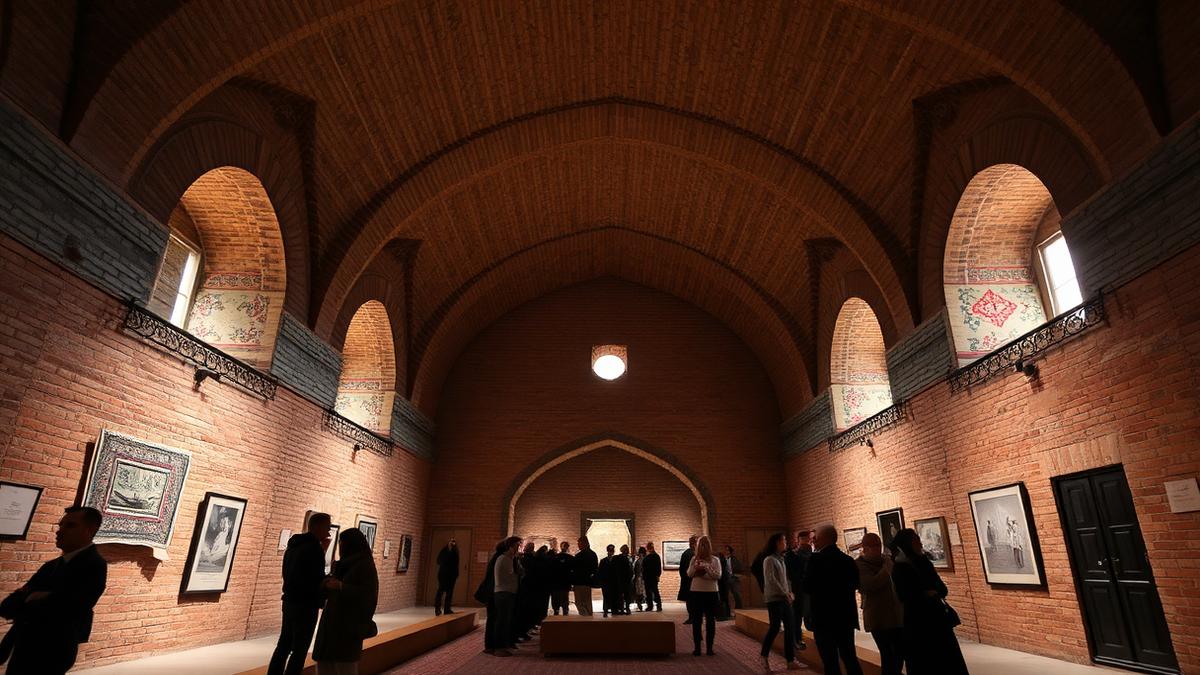
The most surprising thing happening in Uzbekistan right now is not in the capital. Bukhara has started installing contemporary art inside its medieval trading domes and caravanserais — and it works far better than it should.
Everyone arrives in Bukhara for the same reasons: the Ark fortress, the Kalyan Minaret that Genghis Khan reportedly refused to destroy, and Lyabi-Hauz under the mulberry trees. What almost no guidebook prepares you for is the other Bukhara that has emerged over the last few years — a city using its empty caravanserais, trading domes and courtyard houses as galleries for contemporary art, craft revival and site-specific installation. It is the most interesting cultural shift in Central Asia right now.
What changed
Uzbekistan spent the 2010s and 2020s building a serious contemporary-culture programme: a national pavilion at the Venice Biennale, major exhibitions of Central Asian avant-garde art abroad, an aggressive restoration push at home, and state-backed foundations commissioning new work. Bukhara — smaller, denser and more intact than Samarkand — turned out to be the perfect canvas. Instead of building a museum, curators put the work inside buildings that have been standing for five hundred years.
Where the art actually is
The trading domes (Toqi)
Toqi Zargaron, Toqi Telpak Furushon and Toqi Sarrafon are the covered crossroads bazaars that have sold jewellery, hats and money for centuries. Alongside the souvenir stalls you will increasingly find contemporary craft studios: modern takes on suzani embroidery, ceramics that reinterpret the Bukharan palette, and textile work that plays with ikat patterns.
Restored caravanserais
Several caravanserais around the old town have been cleared and stabilised, giving vast brick halls with perfect diffuse light. These are the spaces used for the large installation work — video, sound, textile hangings and sculpture — and they are the reason the whole idea works: the architecture does half the curation.
Courtyard houses and workshops
The Jewish quarter and the lanes east of Lyabi-Hauz hide dozens of merchant houses with carved ganch plaster and painted ceilings. Many now function as guesthouses with studio space attached. Knock, ask politely, and you will often be shown the room upstairs.
How to plan a culture-first Bukhara trip
- Give Bukhara three nights, not one. The monuments take a day; the workshops, studios and installations need unhurried wandering.
- Stay inside the old town. Everything is walkable and the old town empties beautifully after 9pm.
- Go early or late for photography — midday light in the domes is flat and the streets are hottest.
- Ask your guesthouse what is currently installed. Programmes rotate, and there is no single reliable listings site in English.
- Combine with Margilan and Rishtan if craft is your main interest — silk in the Fergana Valley, ceramics in Rishtan, textiles and metalwork in Bukhara.
The craft revival is the real story
Behind the installations sits something more durable: a generation of Bukharan makers who trained abroad or online and came back. Gold embroidery, miniature painting, knife-making, block-printed textiles and hand-thrown ceramics all have young practitioners again. Buying directly from a workshop rather than a souvenir stall costs a little more and keeps the skill alive — and you get provenance, which matters if you plan to export anything old-looking.
Samarkand overwhelms you. Bukhara lets you live inside it — which is exactly why contemporary art fits here and not there.
Practical 2026 notes
- Getting there: Afrosiyob high-speed train from Tashkent (about 4 hours) or Samarkand (about 1.5 hours). Book 2–4 weeks ahead in spring and autumn.
- Best seasons: April–May and September–October. July and August regularly pass 40°C.
- Money: bring cash for workshops; many small studios do not take cards and foreign cards cannot pay local QR codes.
- Export rules: anything genuinely antique needs certification. Reputable workshops will document a new piece for you.
Honest verdict
If you think of Bukhara as a stop between Samarkand and Khiva, you will see a beautiful old town in one day and leave. If you treat it as the cultural capital it is quietly becoming, it is the most rewarding three days in the country.