The Ark of Bukhara & the Emir's Bug Pit: 2,500 Years Inside Central Asia's Oldest Fortress (2026 Guide)
· 11 min read · History
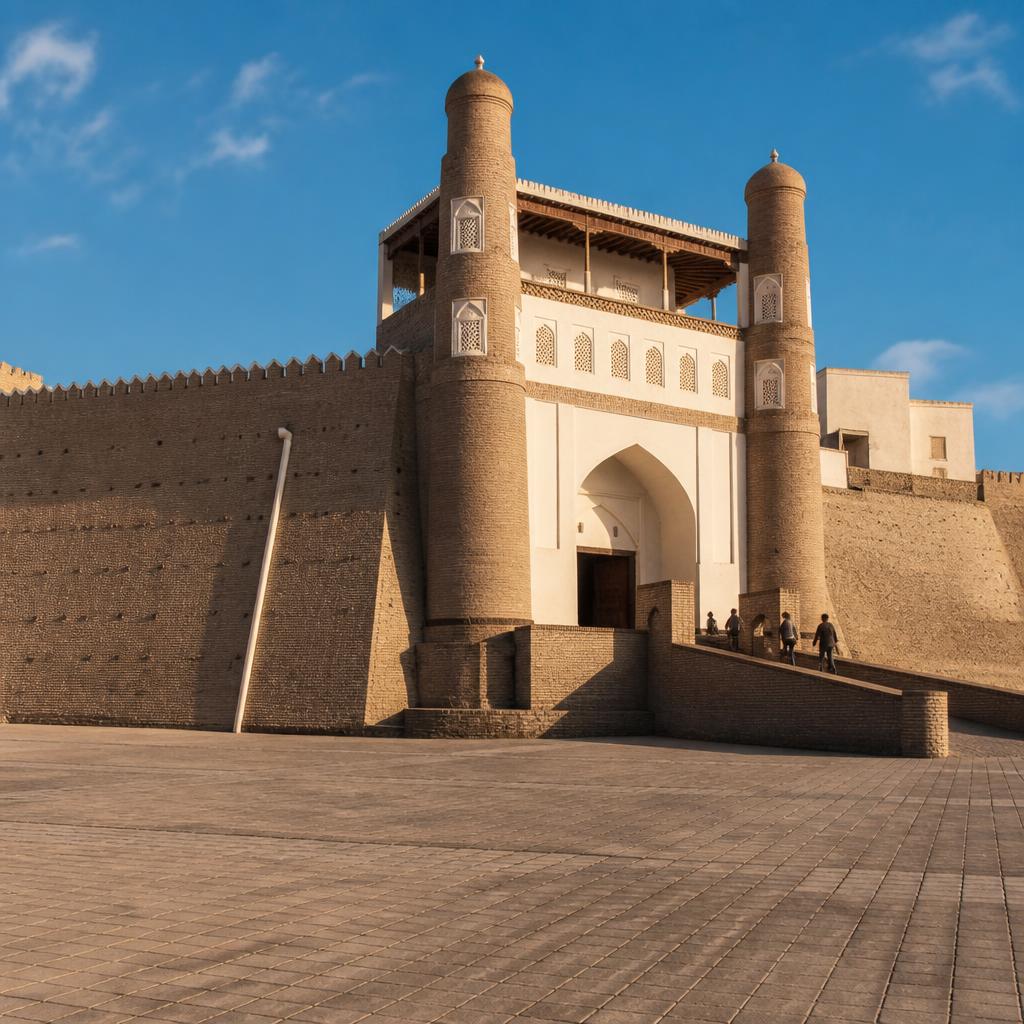
For 2,500 years every ruler of Bukhara lived inside the same mud-brick fortress. In 1842 two British spies were thrown into a pit inside it — full of scorpions, ticks and human waste. Here's the 2026 guide.
The Ark rises 20 metres above Registan Square in Bukhara — a lopsided mountain of sun-dried brick that looks half-melted. It is the oldest structure in a UNESCO city famous for old structures: continuously occupied since at least the 5th century BCE, home to every emir, khan and satrap who ever ruled Bukhara. This is the 2026 guide to what to see inside — and to the notorious dungeon just outside its walls that made the Ark a legend of Victorian British spy literature.
The Ark in 60 seconds
'Ark' (Uzbek: Ark, Persian: ارگ) simply means citadel. The fortress covers 3.9 hectares and was destroyed and rebuilt at least a dozen times — most recently in 1920, when the Red Army under Frunze shelled it during the Bukhara operation and set it on fire. About 20% of the original interior survived: the coronation courtyard, the mosque, the mint, the royal stables, the great gate. Today it is a museum complex — five small museums inside one massive shell.
What you actually see inside
The great gate and ramp
Two round towers flank a covered ramp that climbs into the fortress. This ramp is where public executions happened — the last one, of two Russian officers, was in 1918. The ceiling of the covered passage still has iron hooks where cages hung.
Juma Mosque (Friday Mosque)
Small 17th-century mosque with a carved elm-wood iwan. This is where the emir prayed. Look up at the ceiling — the beams are painted in the original 18th-century floral patterns.
The Coronation Court (Kurinishkhana)
The white marble throne where every emir of Bukhara was crowned still sits in an open courtyard. The last coronation was Alim Khan in 1910. He fled to Afghanistan when the Bolsheviks took the city and died in Kabul in 1944.
Museums
Numismatics (1,200-year-old Silk Road coins), calligraphy (early Qurans), local history (a scale model of pre-1920 Bukhara), and a small gallery of photos taken by the Russian orientalist Prokudin-Gorsky in 1911 — colour images of a city that no longer exists.
The Zindan — the emir's bug pit
A five-minute walk north of the Ark, the Zindan is the old prison — and specifically, the two 6-metre deep 'bug pits' where the emir kept his most inconvenient prisoners. In 1838 the British officer Colonel Charles Stoddart was thrown into one; his rescuer Captain Arthur Conolly joined him three years later. Both were kept in the pit with scorpions, sheep ticks and human waste for months before being beheaded in front of the Ark on 24 June 1842. Their story became the founding legend of the Great Game. You can climb down into the pit today — bring a torch. Entry 20,000 UZS.
2026 tickets and hours
- Ark (full complex incl. all 5 museums): 80,000 UZS (~$6.50).
- Zindan (dungeon): 20,000 UZS separate ticket.
- Photography: free with any ticket.
- English/Russian/German guide: 250,000 UZS for 90 min.
- Open daily 9:00–19:00 in summer, 9:00–17:00 in winter. Last entry 30 min before close.
Best time to visit
8:30 arrival on a weekday — the Ark opens at 9:00 and the coronation courtyard is empty for the first 30 minutes. Golden hour on the ramparts is 90 minutes before sunset (around 19:00 in July, 16:30 in December). Friday afternoons are the busiest as domestic tourists join international ones.
Combine with these
- Bolo Haouz Mosque — directly opposite the Ark, 20 columns reflected in a pool.
- Zindan (dungeon) — 5 min walk north.
- Ismail Samani mausoleum — 10th-century masterpiece, 10 min walk west.
- Chashma Ayub — the 'Job's Spring' shrine, next to Ismail Samani.
Honest verdict
The Ark is 30% shell, 70% imagination — you have to know the stories to feel it. Read the Stoddart-Conolly chapter in Peter Hopkirk's 'The Great Game' the night before you go. Then, standing over that stinking bug pit with a torch on your phone, you will feel more of the 19th century in ten minutes than any Silk Road museum can give you in an afternoon.