Aydarkul Lake & Nurata Yurt Camp: A Real Desert Night Under the Kyzylkum Stars (2026 Guide)
· 10 min read · Adventure
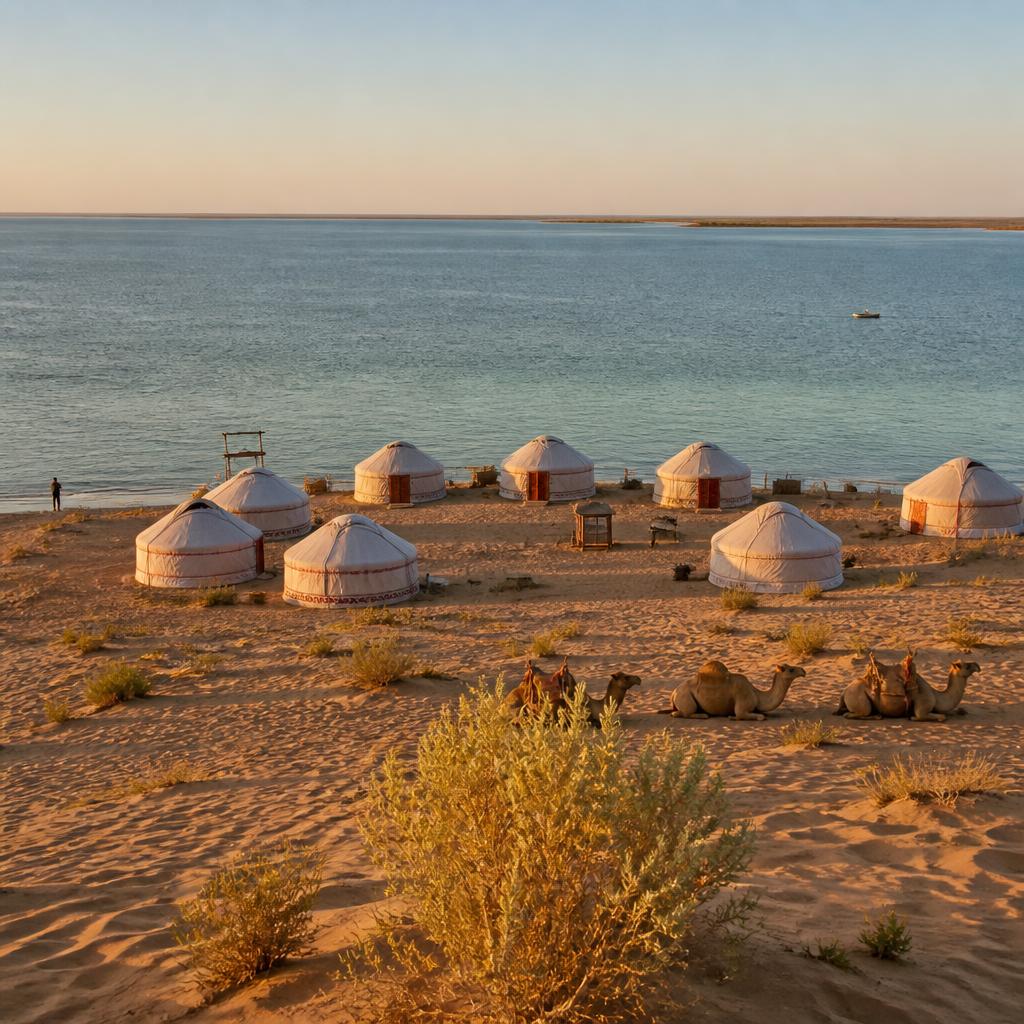
In 1969 a Soviet dam broke by mistake and flooded 4,000 km² of the Kyzylkum desert. Fifty-five years later, that accident is Uzbekistan's most surreal overnight: turquoise water lapping at red dunes, a felt yurt, a camel outside your door. Here's how to do it properly.
There is a photo Uzbekistan-bound travelers keep sending each other: white yurts in a semicircle, camels dozing on red sand, and behind them a sea of blue water where there should be desert. That is Aydarkul, and it should not exist. This is the 2026 guide to sleeping there.
How a Soviet accident created the second-largest lake in Uzbekistan
In April 1969, unusually heavy snowmelt overwhelmed the Chardara reservoir on the Syr Darya river. To save the dam, engineers opened emergency spillways into the Arnasay depression — a low salt basin in the middle of the Kyzylkum desert. Water kept flowing. By the 1980s a 4,000 km² lake had formed. Fifty years on, Aydarkul is now about 3,000 km² (bigger than Luxembourg) with its own fish, birdlife and shoreline economy. It is entirely man-made, entirely by accident.
Where the yurt camps are
Almost all overnight camps sit on the southern shore near Dungalak village, a 40-minute drive from Nurata. Nurata itself is roughly halfway between Samarkand (200 km) and Bukhara (220 km) — which is why the yurt night is almost always sold as a Samarkand–Nurata–Bukhara stopover, not a standalone destination.
The three main yurt camps in 2026
Aydar Yurt Camp (the classic)
The original, opened 2004. About 25 traditional wool yurts, shared bathrooms, no wifi. Dinner is plov in the main mess yurt, followed by a bard playing dombra by the campfire. $55–70 pp full board including camel ride. Feels the most authentic.
Safari Yurt Camp
Newer (2018), slightly larger yurts with real beds and en-suite bathroom blocks. Better for families and people who need a hot shower. $75–95 pp full board.
Nuratau Eco Yurt Camp (Sentyab)
Not on Aydarkul itself but 90 minutes south in the Nuratau mountains, near the CBT village of Sentyab. Mountain streams, walnut trees, hiking. Combine with a night at the lake for the full contrast. $60 pp with homestay dinner.
How to get there from Samarkand or Bukhara
- From Samarkand: 3.5 hours by car via Jizzakh and Farish. Private transfer 700,000–900,000 UZS one-way.
- From Bukhara: 4 hours via Navoi and Nurata. Private transfer 800,000–1,000,000 UZS one-way.
- Group tours: two-day Samarkand → Aydarkul → Bukhara packages start at $110 pp including transfer, yurt, meals, camel and Nurata sightseeing.
- Public transport: not realistic — shared taxis end at Nurata town, then you'd need a private car to the camp.
What a typical night looks like
Arrival 17:00–18:00. Change into loose clothes, take a 45-minute camel ride along the dunes at sunset (included), swim in the lake if July–August (water is warm and slightly salty), dinner around 20:00 — usually plov, salads, watermelon. After dark a shashlik fire and a local bakhshi bard singing centuries-old dastan epics. Yurts get cold after midnight even in summer (down to 12°C) — extra blankets are stacked inside. Wake before sunrise for the best light on the water, breakfast at 08:00, leave by 10:00.
What else to see near the lake
Nurata town
45 minutes south. Highlights: the 4th-century BC fortress of Alexander the Great (only ramparts left, free to climb), the sacred Chashma spring with its holy fish (open 08:00–19:00, free), the Panjvakhta minaret. Two hours is enough.
Sentyab village and the Nuratau Nature Reserve
Community-based tourism village, home-cooked meals with local families, easy hikes to waterfalls and Sarmish Gorge petroglyphs.
When to go
- April–May: wildflowers, comfortable 22°C days, cool nights.
- June: swimming season begins, still bearable.
- July–August: 38–42°C by day, 20°C by night, water at 26°C — hot but doable if you accept a lot of napping.
- September–October: the sweet spot. 28°C days, warm water, empty camps.
- November–March: camps close. Wind, cold, no camels.
What to pack
- Head torch — no electricity in most yurts after 23:00.
- Warm layer for the evening even in July.
- Swimsuit and quick-dry towel.
- Sunblock 50+ — no shade on the dunes.
- Baby wipes if you're at a camp with squat/bucket toilets.
- Cash in UZS — no card machines anywhere near the lake.
Honest verdict
Aydarkul is a one-night stop, not a base. The camel ride is short, the food is average, the toilets are basic. But watching a full moon rise over a lake that did not exist when your parents were teenagers, while an old man sings in a language older than English, while your camel snores 20 metres away — that is a genuinely unique overnight, and one of the few Central Asia experiences no photograph really captures. Book it once.