The Aralkum (2026): The World's Newest Desert, and Uzbekistan's Attempt to Plant a Forest On It
· 11 min read · Nature
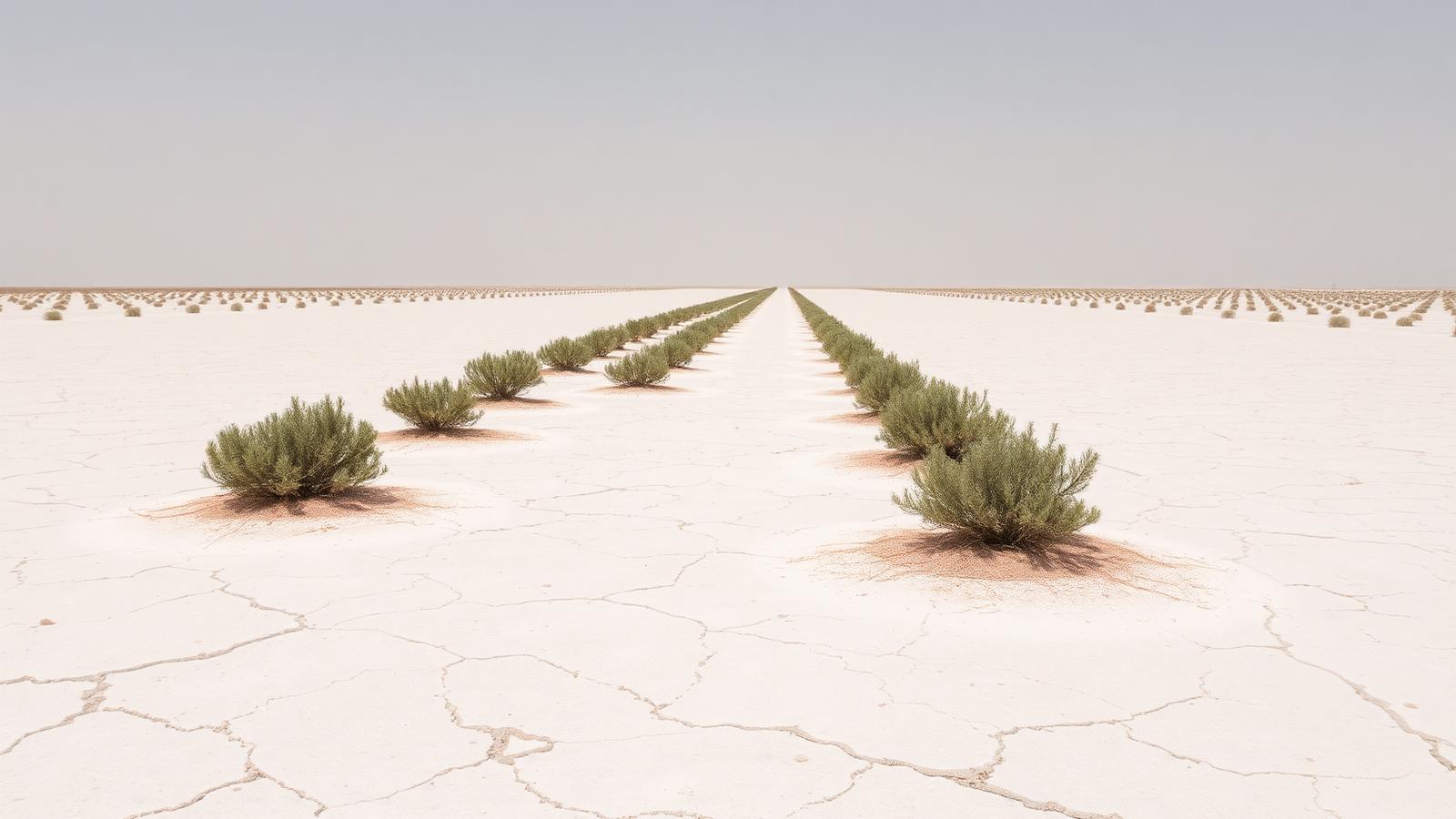
A sea disappeared and left a desert behind — the Aralkum, the only major desert on Earth to form within living memory. Uzbekistan is now trying to cover it with shrubs. Here is what is actually happening on the ground.
There is a phrase you hear in Nukus that visitors rarely expect: 'the new desert'. It is not a metaphor. The Aral Sea's southern seabed dried into a salt plain of tens of thousands of square kilometres, and geographers gave it a name — the Aralkum, the Aral Sand Desert. It is the youngest desert of its size in the world, it did not exist when today's grandparents were children, and Uzbekistan is now trying to plant a forest across it.
How a sea becomes a desert
From the 1960s, Soviet planners diverted the Amu Darya and Syr Darya to irrigate cotton on a continental scale. The Aral Sea — once the fourth-largest lake on Earth — lost its inflow and shrank. By the 2010s the eastern basin had gone dry in some years entirely. What was exposed was not clean sand but a seabed loaded with salt, agricultural chemical residue and fine sediment.
That surface is the problem. Wind lifts the salt-laden dust and carries it hundreds of kilometres in storms that coat farmland, kill crops, corrode infrastructure and load the air of Karakalpakstan with particles that local health statistics have been recording for decades in rates of respiratory and other disease. The sea's disappearance also destroyed the fishing economy of Moynaq and moderated nothing — summers got hotter, winters colder, the growing season shorter.
Why the sea cannot simply be refilled
Refilling the southern Aral would require abandoning irrigated agriculture across a region where tens of millions of people live, in a basin already stressed and now under additional pressure from upstream projects on the Amu Darya. Kazakhstan's dam has partly restored the smaller North Aral, which is a genuine success story. For Uzbekistan's much larger southern basin, no honest official claims the sea is coming back. The stated goal changed from restoration to damage control.
The plan: green the seabed
Damage control means stabilising the surface so it stops blowing away. The instrument is a plant most travellers have never heard of: saxaul (Haloxylon, black saxaul — in Uzbek cherkez or saksovul), a gnarled desert shrub-tree that tolerates salt and drought, roots deeply, and holds sand in place.
- Saxaul plus salt-tolerant companions (tamarisk, kandym, various halophytes) are seeded and planted across the exposed seabed, largely by aerial seeding and mechanised planting because of the scale involved.
- Uzbekistan reports planting across a very large share of the dried Uzbek seabed since the programme accelerated in the late 2010s, with millions of hectares targeted and the work continuing through 2026.
- The purpose is a windbreak carpet, not a woodland. Nobody expects shade or timber. Success is measured in dust suppression and surviving root systems.
- Secondary benefits claimed include carbon storage, returning wildlife habitat, and grazing land at the margins.
Does it work?
Partly, and the honest picture is mixed. Where plantings survive, they demonstrably reduce surface wind erosion and begin to hold soil. Survival rates, however, are the whole ballgame: seedlings on heavily salted crust with no irrigation die in large numbers, coverage is patchy, and independent monitoring of what is actually alive years later is thinner than the announcement figures suggest. The scientific consensus is that afforestation is a sensible mitigation tool and not a solution, and that dust storms will continue for decades regardless.
Seeing it yourself in 2026
This is one of the few places in the world where you can stand on the floor of a sea that vanished during a human lifetime, and it is accessible if you plan properly.
- Base — Nukus, capital of Karakalpakstan, reachable by domestic flight from Tashkent in under two hours or by overnight train.
- The classic run — Nukus to Moynaq (about 200 km, three to four hours by road) to see the ship graveyard sitting on dry ground, then onward across the former seabed toward the Ustyurt plateau escarpment and the remaining water.
- Vehicle — a 4x4 with a local driver, not a rental car. There is no fuel, no phone signal for long stretches, and no help. Overnight trips are usually yurt or tent camps on the old seabed.
- Cost — expect roughly USD 250–500 for a two-day, one-night 4x4 trip for a small group in 2026, split between passengers; day trips to Moynaq only are far cheaper.
- Season — April to early June and September to October. Summer on a salt flat is brutal; winter is genuinely cold and windy.
- What you will see of the planting — young saxaul in rows and blocks along stretches of the drive, ranging from established and green to dead sticks. That contrast is the most honest exhibit in the country.
Health and safety on the seabed
Bring a proper dust mask or buff, sealed water, and eye protection. Dust here is not ordinary dust — it carries salt and old agricultural residue. If a storm comes up, drivers stop; do not push them to keep going. Anyone with asthma or a serious respiratory condition should think carefully before a multi-day seabed trip.
Why this is worth understanding before you visit
The Aral is used as shorthand for environmental catastrophe by people who have never been. On the ground it is more specific and more interesting: a fishing town without a sea, a museum in Nukus holding a world-class avant-garde collection because the place was too remote to police, dust storms measured by satellite, and a state programme trying to bolt a shrub carpet onto a desert it accidentally created. It is disaster tourism only if you go for the photographs and learn nothing.
The Aralkum is the only desert on Earth whose birthday can be dated. Uzbekistan cannot undo it, so it is trying to hold it down.
Quick answers
- Is the Aral Sea gone? The large southern basin in Uzbekistan is mostly gone; a deeper western remnant survives, and Kazakhstan's North Aral has partly recovered behind a dam.
- Is it safe to visit? Yes, with a local driver, dust protection and a realistic itinerary.
- Can you swim in what is left? The remaining water is extremely saline and remote. Treat it as scenery, not a beach.
- Is the tree planting propaganda? The programme is real and measurable in places; the headline hectare figures deserve more scepticism than the underlying idea does.