Almalyk (2026): Inside the Copper Town Powering Uzbekistan's Green Boom
· 10 min read · Culture
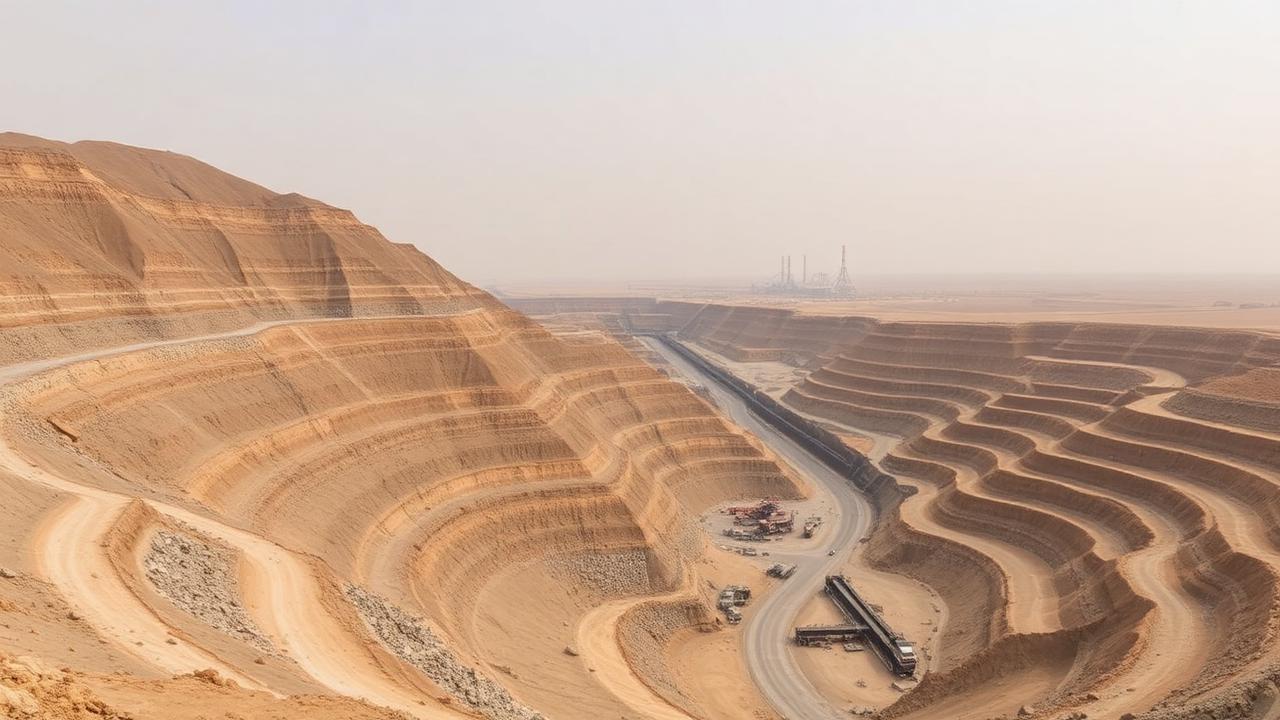
Every electric car needs about 80 kilograms of copper. Uzbekistan happens to be sitting on one of the largest copper deposits in the region, and the town on top of it is an hour from Tashkent.
Almalyk — the name means apple orchard — is a Soviet-founded industrial town in the Tashkent region, roughly 65 kilometres south-east of the capital at the foot of the Kurama range. It is not on any tourist itinerary, and it will not be. It is on this site because it explains something about modern Uzbekistan that no mosque can: where the money for the new skyline is coming from, and what the country is betting on for the next twenty years.
Why copper matters right now
The global energy transition is, in material terms, a copper story. Electric vehicles, grid upgrades, wind turbines and solar farms all consume far more copper per unit than what they replace. Uzbekistan's Almalyk Mining and Metallurgical Combine — AMMC, usually written as Almalyk MMC — sits on the country's principal copper-gold-molybdenum deposits and has been running one of the largest industrial expansion programmes in Central Asia, centred on the Yoshlik deposit, with the stated aim of roughly doubling copper output.
The scale in plain terms
- Almalyk MMC is one of Uzbekistan's largest employers and taxpayers, with tens of thousands of workers.
- It produces copper, gold, silver, molybdenum, zinc and sulphuric acid — the gold output alone makes it significant even before the copper.
- The Yoshlik I expansion is a multi-billion-dollar programme involving a new open pit, concentrator and smelter capacity.
- Uzbekistan's other mining giant, Navoi MMC, runs the Muruntau gold operation — covered separately at /blog/muruntau-worlds-largest-gold-mine-uzbekistan-guide-2026
What the town is actually like
Almalyk is a planned industrial town of roughly 130,000 people: wide avenues, mid-century apartment blocks, a Palace of Culture, a stadium, and a mountain backdrop that is genuinely beautiful on a clear morning. It has the specific atmosphere of a company town where nearly everyone's household is one degree of separation from the combine. There is a mining museum, Soviet mosaics on public buildings that are as good as anything in Tashkent, and a football club with a devoted following.
Air, water and the honest part
Heavy non-ferrous metallurgy has environmental costs and Almalyk has carried them for decades. Local complaints about air quality, particularly sulphur dioxide and dust on still winter days, are long-standing and well documented in the Uzbek press, and the company has committed to emissions-reduction equipment as part of the modernisation programme. Any honest description of the town includes this. If you have respiratory sensitivity, this is not a place to spend a smoggy January afternoon — see also /blog/tashkent-air-quality-winter-smog-guide-2026
Can you visit the mine?
Not casually. Active open pits and smelters are industrial sites with restricted access, and turning up at a gate with a camera is a bad plan anywhere in the world. Organised industrial tours are occasionally arranged for delegations and students rather than tourists. What is accessible is the town itself, the museum, and the viewpoints on the road up towards the Kurama mountains, from which the terraced pit benches are visible at a distance.
Getting there and what a day looks like
- Shared taxi or bus from Tashkent's southern transport hubs: around 1.5 hours depending on traffic.
- By car: a straightforward drive on decent road, easily combined with Angren or a run up towards the Kamchik Pass.
- Half a day is enough for the town. The mountains behind it justify a full day.
- Weekday mornings are best; the town is quiet and the light is clearer before industrial haze builds.
Who this trip is actually for
- Anyone interested in Soviet urban planning and industrial architecture, which Almalyk has in unusually intact form.
- Mosaic and monumental-art hunters who have already done the Tashkent circuit.
- Travellers curious about how a resource economy works on the ground rather than in a mineral report.
- Photographers who like industrial landscape at distance and know not to photograph the fence line.
The bigger picture
Uzbekistan's transformation over the past decade — the new airports, the metro extensions, the mega-projects — is financed substantially by exactly this kind of ground: gold at Muruntau, copper at Almalyk, gas in the Kyzylkum. Understanding that makes the rest of the country legible. The gleaming towers of New Tashkent and the terraced pit outside Almalyk are the same story told from two ends: /blog/new-tashkent-city-mega-project-skyscrapers-2026
Nobody flies to Uzbekistan for Almalyk. But if you have a spare day in Tashkent and you would rather understand a country than photograph another dome, it is one of the more instructive hours you can spend on a road out of the capital.